7 Min Read
.webp "CABG surgery recovery guide")
Undergoing Coronary Artery Bypass Grafting (CABG) surgery is a significant step towards a healthier heart. Often referred to as bypass surgery, CABG is a procedure that improves blood flow to the heart, alleviating symptoms like chest pain, shortness of breath and preventing sudden cardiac death
While the surgery itself is a remarkable feat of modern medicine, with over 98% of patients experiencing significant improvement in symptoms and quality of life, the journey to optimal heart health truly begins after the operation. Embracing a heart-healthy lifestyle post-CABG is essential for long-term well-being and preventing future cardiac issues.
This guide from Manipal Hospitals will walk you through the crucial steps to ensure a robust and active life after your heart surgery.
Synopsis
Embracing a Heart-Healthy Lifestyle After CABG
Your recovery from CABG surgery is a unique and personal journey. However, certain lifestyle adjustments are universally beneficial and critical for maintaining the positive outcomes of your surgery. By diligently following these guidelines, you can significantly enhance your recovery, improve your quality of life, and reduce the risk of future heart complications.
1. Cardiac Rehabilitation: Your Structured Path to Recovery
-
One of the most vital components of CABG recovery is participating in a structured cardiac rehabilitation program.
-
These programs are designed by multidisciplinary teams, including cardiologists, nurses, dietitians, and exercise physiologists, to help you regain strength, understand your condition, and adopt heart-healthy habits safely.
-
Studies show that participation in cardiac rehabilitation can reduce the risk of future heart-related events by up to 25% and significantly improve overall functional capacity.
-
It’s a crucial step in learning how to exercise safely and manage your new lifestyle effectively.
2. Nurturing Your Heart with Nutrition
-
What you eat plays a profound role in your heart health. A heart-healthy diet is fundamental for managing blood pressure, cholesterol levels, and blood sugar, all of which are critical after CABG.
-
Focus on a diet rich in fruits, vegetables, whole grains, lean proteins, and healthy fats.
-
Limit processed foods, sugary drinks, excessive salt, and unhealthy saturated and trans fats.
-
Adopting a heart-healthy diet can lower the risk of cardiovascular events by 10-20%, providing a strong defence against recurring issues.
3. Move Your Body: Safe Exercise Guidelines
-
Gradual and consistent physical activity is key to strengthening your heart muscle and improving overall cardiovascular health.
-
Your cardiac rehabilitation team will provide personalised exercise after heart surgery guidelines, typically starting with light walking and slowly progressing to moderate activities.
-
Avoid heavy lifting or strenuous activities until cleared by your doctor.
-
Regular exercise not only improves physical fitness but also aids in stress management for heart health.
4. Stress Management for a Calmer Heart
-
Stress can take a toll on your heart. Learning effective stress management techniques is an important part of post-CABG care.
-
Practices like deep breathing exercises, meditation, yoga, or engaging in hobbies you enjoy can significantly reduce stress levels.
-
Connecting with support groups or talking to a counsellor can also be beneficial in managing emotional challenges that may arise during your recovery.
5. Medication Adherence and Regular Check-ups
-
Following your prescribed medication regimen diligently is paramount.
-
These medications often help manage blood pressure control, cholesterol management, and prevent blood clots.
-
Regular follow-up appointments with your expert cardiologists at Manipal Hospitals are essential to monitor your progress, adjust medications if needed, and address any concerns.
-
This consistent post-surgery care ensures your heart remains in the best possible condition.
6. Quit Smoking and Limit Alcohol
-
If you smoke, quitting is the single most impactful lifestyle change you can make for your heart.
-
Smoking dramatically increases the risk of heart disease recurrence.
-
Within one year of quitting, the risk of heart disease drops dramatically by about 50%.
-
Similarly, moderate alcohol consumption is advised; excessive drinking can negatively impact blood pressure and interact with medications.
7. Managing Underlying Conditions
-
Conditions like high blood pressure, diabetes, and high cholesterol often contribute to heart disease.
-
After CABG, meticulous management of these conditions is crucial.
-
Work closely with your doctor to keep your blood pressure and blood sugar levels within target ranges.
-
Effective diabetes management and proactive blood pressure control are vital components of preventing further damage to your cardiovascular system.
Care Essentials: Do's and Don'ts After CABG
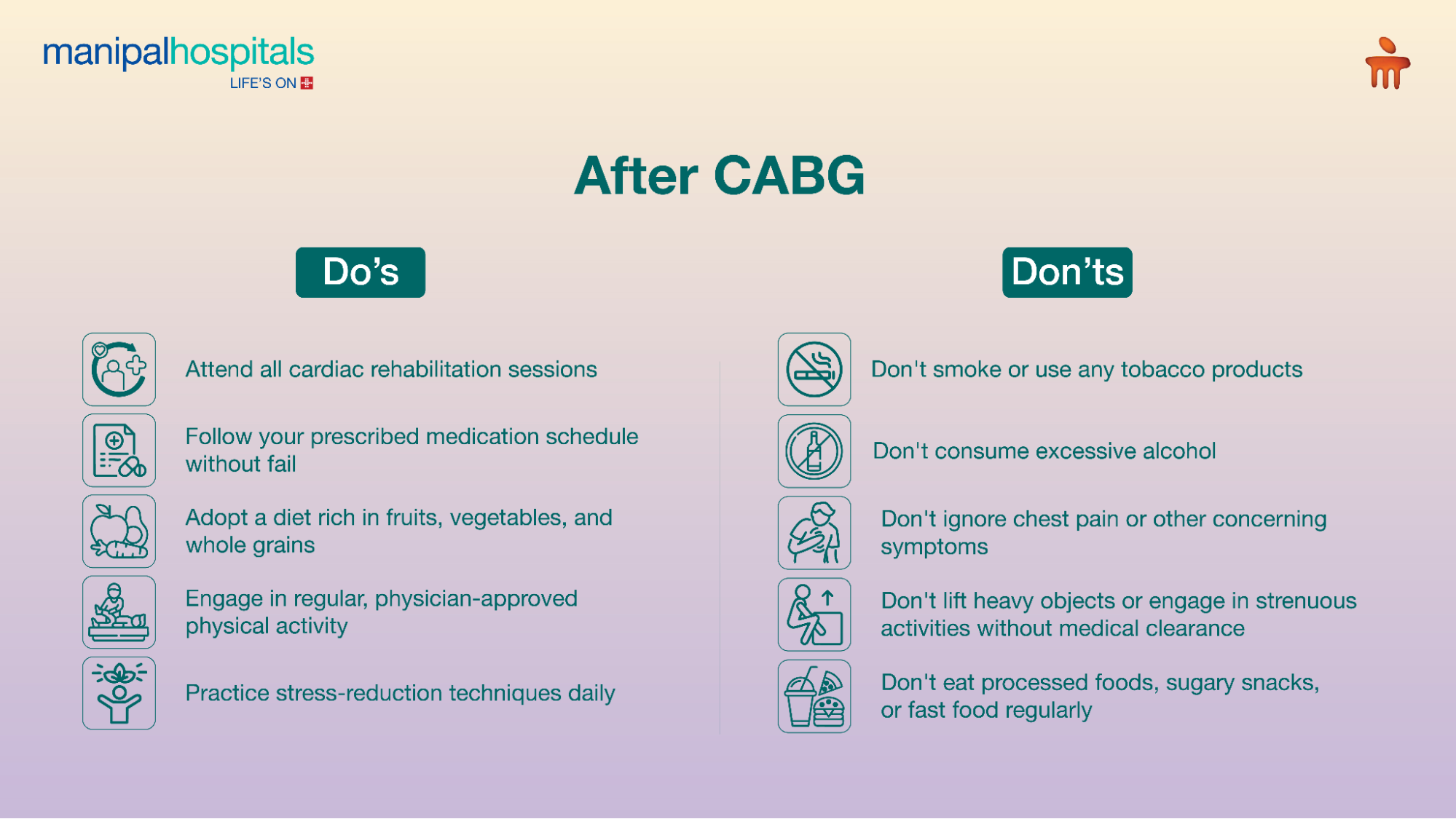
To further guide your recovery and promote a heart-healthy lifestyle, here's a quick overview of essential do's and don'ts:
|
Do's |
Don'ts |
|
Attend all cardiac rehabilitation sessions. |
Don't smoke or use any tobacco products. |
|
Follow your prescribed medication schedule without fail. |
Don't consume excessive alcohol. |
|
Adopt a diet rich in fruits, vegetables, and whole grains. |
Don't ignore chest pain or other concerning symptoms. |
|
Engage in regular, physician-approved physical activity. |
Don't lift heavy objects or engage in strenuous activities without medical clearance. |
|
Practice stress-reduction techniques daily. |
Don't eat processed foods, sugary snacks, or fast food regularly. |
|
Get adequate sleep (7-9 hours per night). |
Don't skip your follow-up appointments. |
|
Monitor your symptoms and report any changes to your doctor. |
Don't let stress go unmanaged. |
|
Stay hydrated by drinking plenty of water. |
Don't isolate yourself; seek support from family, friends, or support groups. |
Conclusion
Life after CABG surgery is an opportunity for a fresh start, a chance to embrace a lifestyle that cherishes and protects your heart. By committing to these heart-healthy practices, actively engaging in your cardiac rehabilitation, and maintaining open communication with your healthcare team at Manipal Hospitals, you are paving the way for a vibrant, healthier future. Remember, your heart is in good hands, and with your commitment, you can look forward to many years of improved health and vitality.
If you have any concerns about your heart health or require expert guidance on your post-CABG recovery, it's crucial to seek timely medical advice. Book an appointment with our expert cardiologists at Manipal Hospitals today.
FAQ's
Recovery varies, but generally, light activities can resume within a few weeks, while more strenuous activities like driving or lifting are typically allowed after 3 weeks, with full recovery often taking 2 months. Always follow your surgeon's and cardiac rehab team's specific instructions.
Many patients require medications long-term to manage blood pressure, cholesterol, and prevent blood clots. Your cardiologist will determine the best medication plan for your individual needs.
A heart-healthy diet, rich in fruits, vegetables, whole grains, lean proteins, and healthy fats, and low in saturated/trans fats, cholesterol, sodium, and added sugars, is recommended.
Cardiac rehabilitation is highly important. It provides supervised exercise, education on heart-healthy living, and emotional support, significantly improving recovery outcomes and reducing the risk of future cardiac events.
Generally, short-distance travel might be possible a few weeks after surgery. For longer trips, especially by air, it's best to consult your cardiologist. They will advise based on your recovery progress.
Share this article on: