6 Min Read
A bone fracture can happen suddenly during a fall, a road accident, sports activity, or even due to weakened bones. While fractures are common, the recovery process requires patience and proper care. Many people often ask: How long does bone fracture healing take? Or what should be done after a bone break?
Understanding the bone healing stages and recovery timeline helps patients follow the right treatment and avoid complications.At Bhagwan Mahavir Manipal Hospital Ranchi, orthopaedic specialists in Ranchi guide patients through every stage of broken bone recovery, ensuring safe and faster healing.
This article explains the bone fracture healing time, stages of bone repair, cast care, and essential dos and don’ts after a fracture.
Synopsis
What Happens When a Bone Breaks?
A bone fracture occurs when excessive force causes a crack or complete break in the bone. Depending on the injury, fractures may be:
-
Simple fracture – bone breaks but does not pierce the skin
-
Compound fracture – bone breaks and protrudes through the skin
-
Stress fracture – small cracks due to repeated strain
-
Comminuted fracture – bone shatters into multiple pieces
-
Greenstick fracture – common in children, where the bone bends and cracks
Regardless of the type, the body naturally starts repairing the damaged bone through a structured healing process.
Bone Healing Stages
Bone healing happens in four main stages. Each stage is important for complete recovery.
1. Inflammatory Stage (First Few Days)
Immediately after the fracture:
-
Blood vessels around the broken bone rupture
-
Blood clots form around the fracture site
-
The body sends healing cells to repair the damage
Symptoms during this stage may include:
-
Swelling
-
Pain
-
Redness
-
Limited movement
This stage usually lasts 3–7 days.
2. Soft Callus Formation (2–3 Weeks)
After the initial inflammation settles:
-
A soft tissue called a callus forms around the fracture
-
This tissue acts as a bridge connecting the broken bone ends
-
Cartilage begins forming in the area
Although the bone is still weak at this stage, the fracture starts stabilising.
3. Hard Callus Formation (4–12 Weeks)
During this stage:
-
Soft callus turns into hard bone tissue
-
Calcium and minerals strengthen the bones
-
The fracture becomes more stable
Patients may start gradual movement or physiotherapy as advised by doctors.
4. Bone Remodelling (Several Months)
In the final stage:
-
The bone reshapes itself
-
Excess callus is removed
-
The bone returns close to its original strength
This process can take several months to a year, depending on the fracture type.
Bone Fracture Healing Time
The bone fracture healing time varies based on several factors such as age, fracture severity, and overall health.
Typical healing timelines include:
| Bone Type |
Average Healing Time |
| Finger or toe fracture |
3–6 weeks |
| Wrist fracture |
6–8 weeks |
| Arm fracture |
8–10 weeks |
| Leg fracture |
10–16 weeks |
| Hip fracture |
3–6 months |
Children usually heal faster, while elderly individuals or patients with osteoporosis may require longer recovery.
Doctors at Bhagwan Mahavir Manipal Hospital, Ranchi, often monitor healing with X-rays and follow-up visits to ensure proper bone alignment.
Factors That Affect Broken Bone Recovery
Several factors influence how quickly a bone heals:
1. Age
Younger individuals heal faster because their bones regenerate quickly.
2. Nutrition
Calcium, protein, and vitamin D are essential for bone repair.
3. Type of fracture
Complex fractures require more time and sometimes surgery.
4. Blood supply
Bones with better blood circulation heal faster.
5. Medical conditions
Conditions like diabetes, osteoporosis, or smoking habits may delay healing.
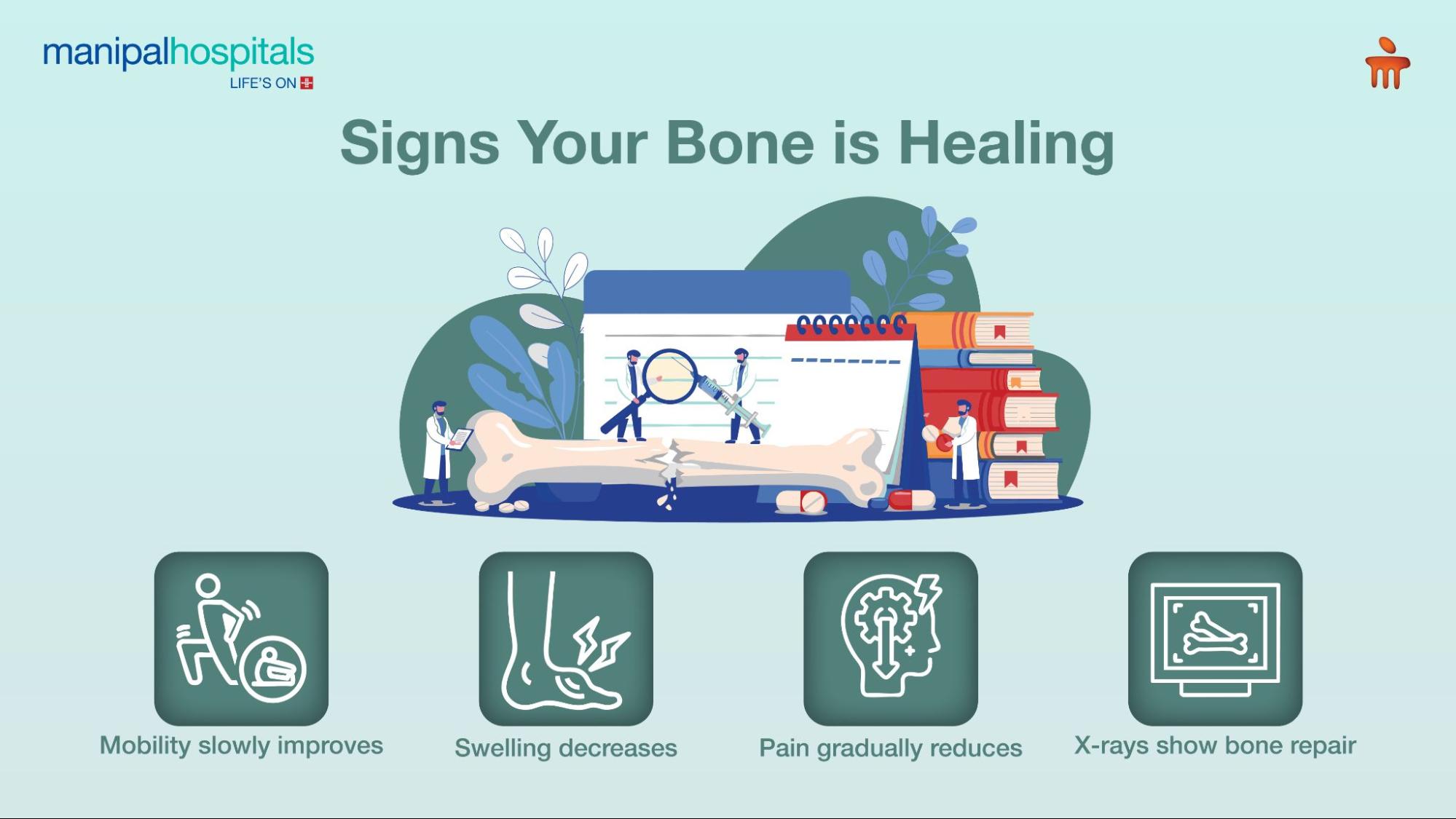
Dos and Don’ts After a Bone Fracture
Following proper care can significantly improve healing.
1. Follow Your Doctor’s Advice
Always follow instructions regarding medication, cast care, and physiotherapy.
2. Keep the Cast Dry and Clean
Proper cast care prevents infection and skin irritation.
Tips include:
-
Cover the cast while bathing
-
Avoid inserting objects inside the cast
-
Check for cracks or damage
3. Eat Bone-Strengthening Foods
Include foods rich in:
-
Calcium (milk, cheese, yoghurt)
-
Vitamin D (sunlight, eggs, fish)
-
Protein (lentils, chicken, nuts)
-
Magnesium and zinc
4. Rest the Injured Area
Avoid putting pressure on the injured limb until your doctor allows it.
5. Attend Follow-Up Appointments
Regular medical check-ups ensure the bone is healing correctly.
Don’ts After a Bone Fracture
Certain mistakes can slow recovery or cause complications.
1. Do Not Ignore Pain or Swelling
Persistent pain may indicate improper healing.
2. Avoid Removing the Cast Yourself
Removing a cast prematurely may cause the bone to shift.
3. Do Not Smoke
Smoking reduces blood flow and delays bone healing.
4. Avoid Heavy Activity
Running, lifting heavy objects, or participating in sports should be avoided until full recovery.
5. Do Not Skip Physiotherapy
Rehabilitation exercises help restore strength and mobility.
Possible Fracture Complications
If fractures are not treated properly, complications may occur.
These include:
-
Delayed union – bone heals slowly
-
Non-union – bone fails to heal
-
Infection (especially in compound fractures)
-
Nerve or blood vessel damage
-
Reduced joint movement
Early medical treatment at specialised centres like Bhagwan Mahavir Manipal Hospital Ranchi helps prevent such complications.
Seek immediate medical attention if you notice:
-
Severe pain after injury
-
Visible bone deformity
-
Inability to move the limb
-
Numbness or tingling
-
Swelling that worsens with time
Prompt treatment ensures proper bone alignment and faster recovery.
Tips for Faster Bone Healing
To speed up the bone healing stages, follow these practical tips:
-
Maintain a balanced diet rich in calcium and protein
-
Stay hydrated
-
Perform doctor-approved exercises
-
Get adequate sleep and rest
-
Avoid alcohol and smoking
Healthy lifestyle choices significantly improve broken bone recovery.
A bone fracture may temporarily disrupt daily life, but with proper treatment and care, most fractures heal successfully. Understanding the bone fracture healing time and stages of bone repair helps patients stay patient and follow the correct recovery routine.
FAQ's
Most fractures heal within 6–12 weeks, but complex fractures may take several months.
Yes. Many fractures heal with casts, splints, or braces, though severe fractures may require surgery.
Foods rich in calcium, vitamin D, protein, and magnesium help strengthen bones.
Yes, mild swelling is common in the early stages but should gradually reduce.
Light exercises or physiotherapy can begin only after doctor approval to avoid re-injury.
Share this article on: