6 Min Read
Knee pain is not just a common ailment; it is one of the leading musculoskeletal complaints that can significantly affect a person’s quality of life. For people living with knee pain, a casual walk or climbing a simple flight of stairs becomes a dreaded challenge. Whether you're experiencing a sharp, sudden twinge or a persistent, dull knee ache, remedy is needed to live life pain free. Understanding the complexities of this joint and the causes behind its pain is the crucial first step toward lasting knee pain relief.
Synopsis
Causes of Knee Pain
The knee is the largest and the most complex joint in the human body, acting as a critical hinge that bears our entire body weight. This complexity, however, makes it susceptible to various injuries and degenerative conditions. Some of these injuries include:
1. Traumatic and Overuse Injuries
These are the most common reasons people seek immediate care for knee pain. They often result from sports, accidents, or repetitive stress:
-
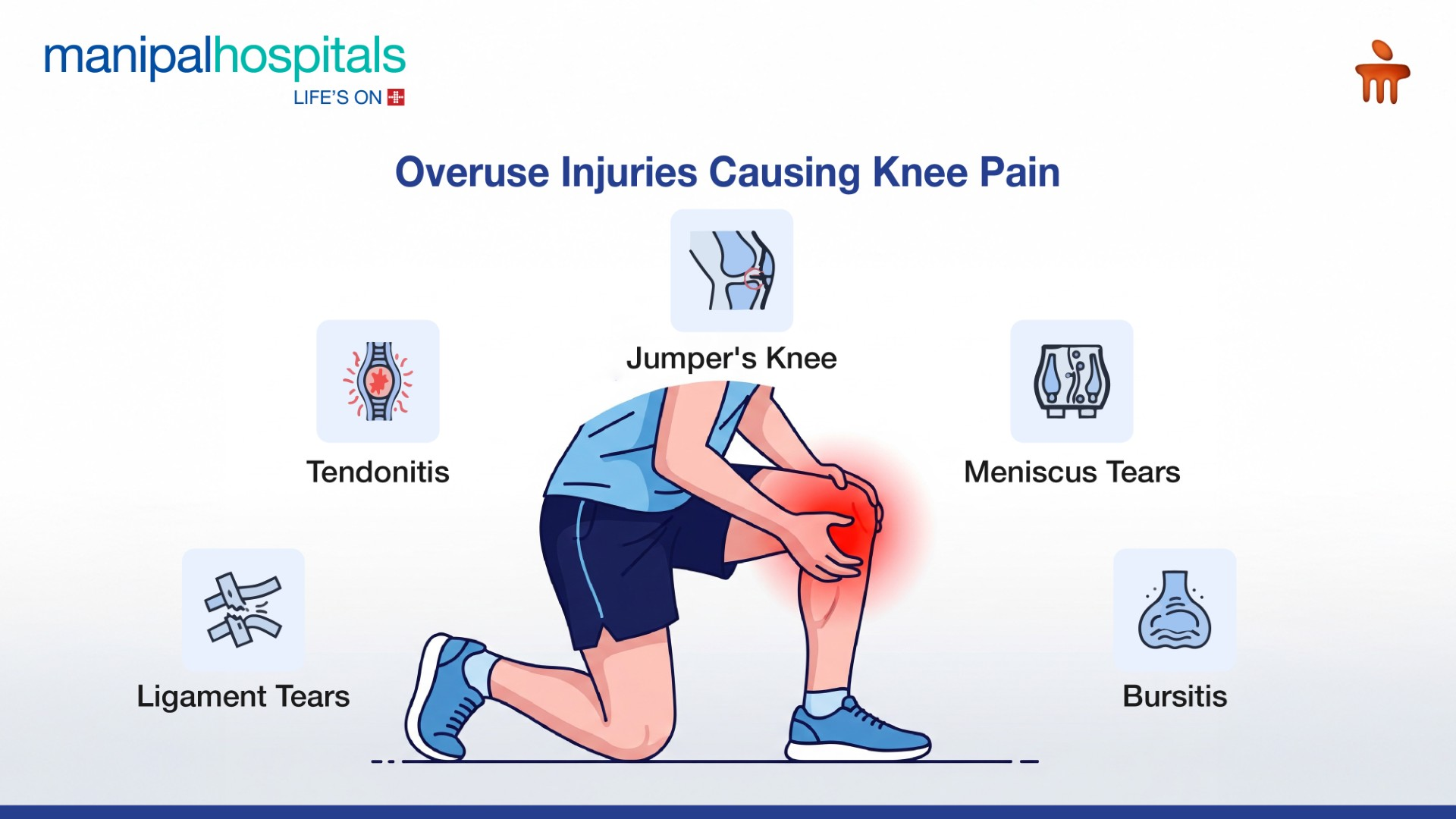
Ligament Tears: A tear to any of the knee’s ligaments can cause pain with the most common being an Anterior Cruciate Ligament (ACL) tear. A tear is typically accompanied by a popping sound, followed by severe instability and an immediate, visible swollen knee. The Medial Collateral Ligament (MCL) tear is also frequent, usually caused by a blow to the side of the knee.
-
Tendonitis and Tendinopathy: This involves inflammation (tendonitis) or chronic degeneration (tendinopathy) of the tendons.
-
Patellar Tendonitis (Jumper's Knee): This characterises as pain focused on the tendon connecting the kneecap to the shinbone and it is common in athletes who have a lot of jumping activities.
-
Quadriceps Tendonitis: This condition appears as pain felt right above the kneecap owing to overuse from running or cycling.
-
Meniscus Tears: The crescent-shaped cartilages (menisci) act as crucial shock absorbers. Meniscus tears can be acute (from a sharp twist) or degenerative (from long-term wear). Symptoms include pain, stiffness, and the frightening feeling of the knee locking or giving way.
-
Bursitis: The infrapatellar or prepatellar bursa can become inflamed from kneeling or repetitive movement. The area feels hot, tender, and the swollen knee often has a distinct, localised bulge.
2. Degenerative and Chronic Conditions
These conditions develop slowly and require long-term management strategies:
-
Osteoarthritis: As one of the main causes of chronic knee pain in older adults, osteoarthritis occurs when the smooth articular cartilage erodes leading to bone rubbing on bone. The pain worsens with activity and improves with rest. As the disease progresses, patients seek knee pain treatments that range from injections to total joint replacement.
-
Rheumatoid Arthritis: Unlike osteoarthritis, RA is an autoimmune disorder where the body’s immune system mistakenly attacks the joint lining (synovium). This causes chronic inflammation, pain, and symmetrical swelling in both knees.
3. Mechanical and Alignment Issues
Sometimes, the pain isn't a joint problem itself, but a consequence of how the leg moves:
-
Patellofemoral Pain Syndrome: The most common source of chronic front knee pain. It occurs when the kneecap (patella) tracks incorrectly in the groove of the thigh bone (femur). It often causes a grinding sensation and pain when descending stairs or after prolonged sitting.
-
Iliotibial (IT) Band Syndrome: The IT band is a tough band of tissue running from the hip down the outside of the thigh. When it becomes tight or inflamed, it can rub over the bony prominence on the outside of the knee, causing lateral knee pain.
-
Referred Pain: Sometimes hip issues or problems in the lumbar spine can radiate down to the knee.
Diagnosing Knee Pain
Getting a precise knee pain diagnosis is the most important step to determining treatment and therapeutic routes. The diagnosis includes:
Comprehensive History and Physical Examination
The physician will gather detailed information about the pain including the intensity, frequency and location. They will use specific maneuvers (like the Lachman test for the ACL or McMurray’s test for the meniscus) to assess the integrity of the ligaments and cartilage.
X-rays
Crucial for assessing the bony structure. They can confirm fractures, look for bone spurs (osteophytes), and measure the space between the bones to gauge the severity of arthritis.
MRI (Magnetic Resonance Imaging)
An MRI provides crystal-clear images of ligaments, tendons, and meniscus, essential for planning reconstructive surgery or intensive knee therapy for pain.
CT Scans
CT is sometimes used to assess complex bone fractures or when a detailed view of the knee cap alignment is needed.
Effective Knee Pain Relief and Treatment Strategies
The path to finding how to get rid of knee pain fast (in acute settings) and achieving long-term freedom is multi-faceted, combining immediate relief with long-term rehabilitative strategies. These represent the best knee pain treatments available today.
Non-Invasive and Lifestyle Adjustments
-
For sudden injuries, the immediate application of Rest, Ice, Compression, and Elevation (RICE) helps stabilise the joint and relieve sore knees. Non-Steroidal Anti-Inflammatory Drugs (NSAIDs) like naproxen or ibuprofen are effective over-the- counter medications for managing initial pain and inflammation.
-
Extra body weight increases the stress on the knees. Losing even a small percentage of weight can dramatically reduce joint loading and slow the progression of osteoarthritis.
-
Temporarily switching from high-impact activities (running, jumping) to low-impact options (swimming, cycling) allows the joint to heal while maintaining fitness.
Conservative and Regenerative Medicine
Physical therapy is the most vital step in conservative knee pain relief. A licensed therapist will design a program focusing on strengthening the muscles surrounding the knees, increase flexibility of the joint, and also correct the abnormal walking patterns that could be contributing to the pain.
Surgical Interventions
When conservative knee pain treatments are exhausted, certain surgical techniques aim to provide definitive structural repair:
-
Arthroscopy: In this minimally invasive technique, the surgeons insert a small camera and instruments through tiny incisions to clean out damaged cartilage, trim a torn meniscus, or repair a fractured bone.
-
Osteotomy: This is a bone-cutting procedure to shift the bone alignment (usually the shin bone or thigh bone) to relieve pressure on the damaged side of the knee joint. It is a good option for younger, active patients with early-stage arthritis.
-
Total and Partial Knee Replacement: Knee replacement is usually the final solution for severe, end-stage arthritis where the joint is completely destroyed. This involves replacing the damaged cartilage and bone with durable metal and plastic components, offering long-term knee pain relief.
Prevention of Knee Pain
The most effective way to address knee pain is to prevent it in the first place.
-
Wear proper shoes that provide adequate support, especially during exercise. Custom orthotics can help correct foot mechanics that contribute to knee strain.
-
Always include dynamic warm up stretches before exercise and static cool down stretches afterward
-
Do not endure the pain. If you start to feel persistent knee pain, modify your activity immediately.
Conclusion
If the knee discomfort is chronic, affects your daily life, or is accompanied by instability or a persistent swollen knee, do not delay seeing a specialist. While there are many ways to temporarily relieve sore knees at home, only a professional can provide the correct knee pain diagnosis and map out the most effective long-term knee pain treatment plan. Our experts from the Department of Orthopaedics at KMC Hospital, Mangalore can help understand the cause of the knee pain and accordingly create treatment plans so that you can live a pain-free life.
FAQ's
Not all pain comes from a dramatic fall. Most knee issues are overuse injuries like tendonitis or gradual wear and tear such as osteoarthritis.
A "pop" followed by immediate swelling and instability usually signals a ligament tear, like the ACL. However, if your knees just "crack" or "crunch" (crepitus) while squatting but don't actually hurt, it’s usually just gas bubbles or tendons moving—totally normal biological percussion.
Ice should be used for acute injuries (the first 48–72 hours) or after a workout to reduce swelling and numb the pain. Heat should be used for chronic stiffness or arthritis. It relaxes the muscles and improves blood flow to the joint.
If you have hurt your knee, this is the gold standard for the first few days:
-
Rest: Give it a break.
-
Ice: 15–20 minutes every few hours.
-
Compression: Use an elastic bandage to manage swelling.
-
Elevation: Keep the knee above the level of your heart
Share this article on: