9 Min Read
Many men struggle with erectile dysfunction in silence, unsure whether what they’re experiencing is temporary or something that needs medical attention. It can affect confidence, relationships, and overall well-being in ways that are rarely discussed openly. The truth is, erectile dysfunction is common and treatable. In India, ED strikes 1 in 5 men over 40 amid surging diabetes cases, yet 70–90% find swift relief through proven treatments.
Often, it is also an early warning sign of underlying health conditions that deserve attention. The issue can stem from stress, physical health conditions, or often a mix of both. This blog explores what is erectile dysfunction and the full range of treatment options for erectile dysfunction available, including advanced solutions when needed.
Synopsis
- What is Erectile Dysfunction (ED)?
- How Common is Erectile Dysfunction?
- ED vs. Premature Ejaculation
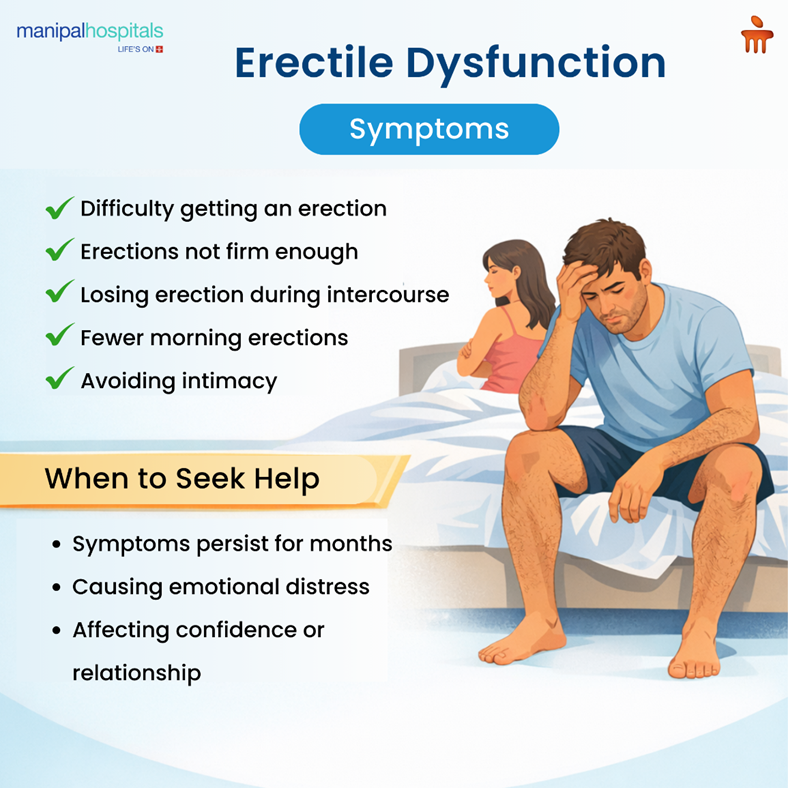
- Erectile Dysfunction Symptoms
- When Should You Seek Help?
- Erectile Dysfunction Causes: Mind, Body, and the Overlap
- How Do Doctors Evaluate ED?
- Evidence-Based Erectile Dysfunction Treatment
- Penile Implant: A Definitive Solution for Severe Cases
- Conclusion
What is Erectile Dysfunction (ED)?
When patients ask, “What is erectile dysfunction?” they often expect a complicated explanation. In reality, an erection depends on a delicate balance between blood flow, nerve signalling, hormone levels, and psychological state.
During arousal, blood vessels in the penis widen, allowing increased blood flow into the erectile tissue. The veins compress to maintain firmness. If any part of this system, whether vascular, neurological, hormonal, or psychological, is disrupted, erection quality may suffer.
ED can be:
-
Occasional (often stress-related)
-
Situational (only with certain partners or circumstances)
-
Persistent (occurring most of the time)
Understanding the pattern is a crucial step in the treatment process, as it can provide important clues about the underlying cause and how to treat it.
How Common is Erectile Dysfunction?
Men are often surprised by the numbers. Research suggests that 20–30% of young men report some degree of erectile difficulty at some point. The percentage increases steadily with age, especially after 40. Premature ejaculation is even more frequent and is considered the most common male sexual dysfunction across age groups.
In other words, if you are worried about erectile dysfunction, you are far from alone. The difference is that many men hesitate to seek help out of embarrassment, not knowing that those who do usually find solutions that are effective and work superbly.
ED vs. Premature Ejaculation
Both bedroom worries often get lumped together, but they are not the same issue. Understanding the difference is the first step towards clarity.
-
Erectile Dysfunction (ED) refers to difficulty achieving or maintaining an erection firm enough for satisfactory intercourse.
-
Premature Ejaculation (PE) refers to ejaculation that happens sooner than desired, with reduced control over timing.
ED is about rigidity, while PE is about timing and control. Basically, both are genuine medical conditions that are highly common in men. However, it is crucial to understand that neither reflects weakness, failure, or inadequacy. Many men experience one or even both at different times in their lives, and both issues respond well to structured care when treated properly.
Erectile Dysfunction Symptoms
Men often assume ED means complete inability to achieve an erection. That is not always the case. Erectile dysfunction symptoms can vary in severity and pattern. Some common signs include:
-
Difficulty getting an erection despite arousal
-
Erections that are not firm enough for penetration
-
Losing the erection during intercourse
-
Reduced frequency of morning erections
-
Avoidance of intimacy due to fear of performance
Symptoms that persist for several months warrant medical evaluation, particularly if they are affecting confidence, relationships, or quality of life.
When Should You Seek Help?
Occasional erection difficulty during periods of stress or fatigue is common. However, if symptoms persist for three months or more, occur consistently, or begin to affect confidence and intimacy, professional evaluation is recommended.
Sudden onset ED in a man with risk factors such as diabetes or heart disease should also prompt medical review, as it may signal underlying vascular issues.
Erectile Dysfunction Causes: Mind, Body, and the Overlap
Sexual function is both physical and psychological. Often, erectile dysfunction causes involve both components working together.
Psychological Factors
Stress, performance anxiety, depression, relationship tension, and unrealistic expectations shaped by pornography can interfere with normal erectile response. Once a single episode of difficulty occurs, anxiety about it happening again can create a cycle that reinforces the problem.
Physical Factors
Underlying health conditions frequently contribute to ED, even in men under 40:
-
Diabetes
-
High cholesterol
-
Obesity
-
Smoking
-
Excess alcohol
-
Low testosterone
-
Sedentary lifestyle
These conditions impair blood vessel and nerve health, directly affecting penile blood flow.
Mixed Causes
A mild physical issue combined with significant anxiety can amplify symptoms dramatically. This overlap is common and highly manageable with the right approach.
How Do Doctors Evaluate ED?
A proper consultation is structured and confidential. It focuses on understanding patterns rather than rushing into tests.
-
Assessment typically includes:
-
Detailed sexual history
-
Review of medical conditions and medications
-
Lifestyle habits
-
Psychological wellbeing
-
Physical examination
-
Blood tests for glucose, lipids, testosterone, and other relevant markers
Imaging or specialised tests are reserved for selected cases. In most men, the cause can be identified through careful clinical evaluation.
Evidence-Based Erectile Dysfunction Treatment
Modern erectile dysfunction treatment goes far beyond simplistic advice. It is personalised, structured, and often highly effective.
Lifestyle Optimisation
Small but consistent changes can significantly improve erectile function:
-
Regular aerobic exercise
-
Weight management
-
Improved sleep patterns
-
Smoking cessation
-
Limiting alcohol
-
Reducing excessive pornography consumption
These changes enhance vascular health and hormone balance.
Psychological and Relationship Support
Psychosexual counselling helps address anxiety, rebuild confidence, and improve partner communication. For many younger men, breaking the anxiety cycle alone restores normal function.
Medication
Phosphodiesterase-5 inhibitors (PDE5 inhibitors) are first-line therapy for many men without contraindications.
|
Medication |
Onset of Action |
Duration |
Food Interaction |
Best Suited For |
|
Sildenafil |
30-60 minutes |
4-6 hours |
High-fat meals delay the effect |
Planned sexual activity |
|
Tadalafil |
20-30 minutes |
Up to 36 hours |
Minimal effect |
Greater spontaneity |
|
Vardenafil |
30-60 minutes |
4-6 hours |
Affected by heavy meals |
Intermittent use |
|
Avanafil |
15-30 minutes |
6 hours |
Minimal effect |
Rapid onset preference |
It is crucial to understand that these medications only enhance blood flow; they do not, however, create automatic arousal. Sexual stimulation is still required for the erection to occur.
Treatment for Premature Ejaculation
Options include:
-
Selective serotonin reuptake inhibitors (SSRIs)
-
Topical anaesthetic sprays or creams
-
Behavioural techniques such as stop-start and squeeze methods
Combining behavioural therapy with medication often produces the strongest results.
Treating the Root Cause
Optimising blood sugar, blood pressure, cholesterol, and testosterone levels is essential for durable improvement. Reviewing medications that may contribute to ED is equally important.
Penile Implant: A Definitive Solution for Severe Cases
For a small group of men with severe, long-standing ED that does not respond to medication or other therapies, penile prosthesis surgery offers a reliable alternative.
A penile implant is a device placed entirely within the penis. The three-piece inflatable implant is most commonly chosen. When activated, it produces a firm erection; when deflated, the penis returns to a soft state.
Important points:
-
Sensation and orgasm usually remain unchanged
-
The erection can be controlled by the patient
-
Satisfaction rates are high when counselling is thorough
-
It is typically reserved for carefully selected cases
This option is not a first step, but it is a life-changing solution when appropriate.
Conclusion
Erectile difficulties are far more common than most men realise, and they are rarely a reflection of masculinity or worth. Erectile dysfunction is a medical condition with identifiable causes and structured, evidence-based solutions. From lifestyle adjustments and targeted medication to counseling and, in some cases, surgical implants, effective care exists at every stage.
If concerns are affecting your confidence or relationship, consider speaking to a qualified urologist or andrologist. For those seeking erectile dysfunction treatment in Kanakapura Road, You can visit the best urology hospital in Kanakpura road bangalore and consult top urologists at Manipal Hospital Kanakapura Road who offer a structured evaluation that can provide clarity, discretion, and a personalised path forward.
FAQ's
Yes. The penile arteries are smaller than the coronary arteries, so vascular changes may appear as ED before heart symptoms develop. Persistent ED in men without obvious psychological triggers should prompt cardiovascular risk assessment.
Prolonged cycling on poorly designed saddles may compress perineal nerves and blood vessels, potentially contributing to temporary erectile issues. Proper saddle design and posture significantly reduce risk.
No. Testosterone replacement is appropriate only for men with documented deficiency and compatible symptoms. Unnecessary use carries risks, including effects on fertility and prostate health.
Situational or stress-related ED may improve once the triggering factor resolves. Persistent ED linked to medical conditions typically requires structured intervention.
Age increases risk, but ED is not inevitable. Many older men maintain healthy sexual function with adequate vascular health, active lifestyles, and appropriate medical care.
Share this article on: