6 Min Read
Is protein powder safe? Yes, protein powder can be safe, but only when it is used thoughtfully, after checking your needs and choosing a quality product.
Protein is essential for sustenance of body functions. It builds and repairs tissue, makes antibodies and hormones, and supports muscle and metabolic health. Most people should aim to meet their daily protein needs from whole foods first. Protein supplements are helpful when you genuinely cannot reach your daily target through diet, when you have higher needs (for example, with regular resistance training), or when a clinician recommends them.
In this blog an experienced liver care specialist in Kanakapura Road, Bangalore discusses the key facts you need to know about protein powders, including when you need protein supplements, how to choose safe protein supplements, and risks of protein powder consumption.
Synopsis
Why Protein Matters?
Protein is not just “muscle food.” Your body uses amino acids (the building blocks of protein) to make antibodies that protect you from infections, hormones that regulate growth and metabolism, enzymes that run chemical reactions, and the structural elements of cells and tissues. Protein also helps keep your acid–base balance steady and preserves muscle as you age. If you don’t get enough, you may experience weakness, delay in recovery from illness, slow healing of injuries, and loss of muscle mass (sarcopenia), which raises the risk of falls and frailty. Studies show there is a steady loss of muscle mass with age, roughly 3 to 8 per cent per decade after about age 30, so maintaining adequate protein is important across adult life.
How Much Protein Do I Need?
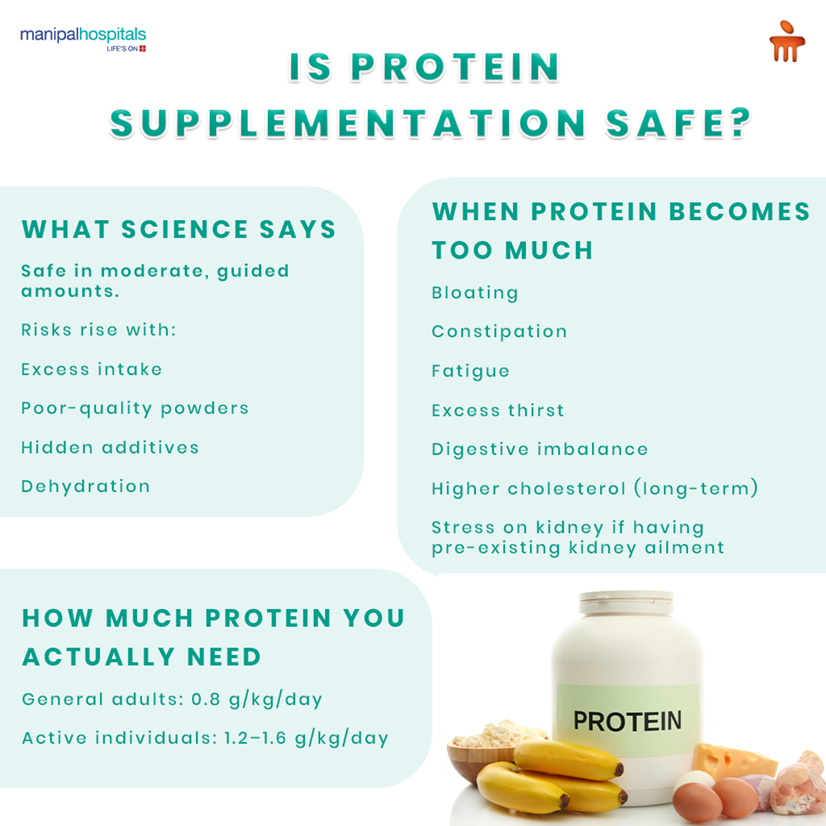
For the average healthy adult in India, expert guidance places the safe/recommended intake around 0.8–0.83 grams per kilogram of body weight per day (so a 70 kg adult ≈ 56–58 g/day) as a baseline. If your diet is largely cereal-based and lower in high-quality protein, practical recommendations often use ~1.0 g/kg to be safe. If you are active, especially if you do regular resistance training, your needs rise; many sports nutrition bodies recommend about 1.2–2.0 g/kg/day, depending on the intensity and goals (maintenance vs building muscle).
In short: baseline ~0.8 g/kg, active people 1.2 g/kg or more, athletes toward the higher end. Always personalise with your clinician or dietitian.
Why Real Food Should Be Your Foundation?
Whole foods such as (lentils, beans, dairy, eggs, fish, poultry, soya, tofu, paneer, nuts and seeds) are rich and natural sources of protein. These foods give you protein plus vitamins, minerals, fibre and other nutrients. A focus on protein-rich whole foods reduces the risk of excessive calories, added sugars or contaminants sometimes found in processed supplements. If you balance your plate and meet your grams of protein from food, you usually won’t need a powder. But real life is busy, sometimes you miss targets, have higher needs, or limited appetite, that’s when a supplement can be a sensible, practical addition.
When is Protein Supplement Recommended?
You might consider a protein powder if:
-
You consistently fall short of your calculated daily protein target despite realistic efforts with whole foods.
-
You are older and trying to prevent loss of muscle mass or sarcopenia while doing resistance exercise.
-
You are an active exerciser with higher protein goals.
-
You have limited time, poor appetite, or dietary restrictions that make whole-food protein hard to reach.
Before starting, check your daily calorie goal (a powder adds calories), your medical history (especially kidneys), and the product label. Consulting an expert hepatologist can confirm whether a short course of supplementation or a long-term plan is appropriate.
How to Choose The Correct Protein Powder?
Here are the practical checklist pointers to scan quickly on the carton or website:
-
Protein per serving (how many grams and what fraction of your daily target).
-
Calories per serving, some powders are high-calorie mass gainers.
-
Added sugars: Avoid supplements with added sugar; it merely adds calories.
-
Type of protein: whey concentrate, whey isolate, casein, pea, soy, rice, mixed plant proteins, yeast protein, etc. If you are lactose intolerant, isolates or hydrolysates often have less lactose, thus having better tolerance.
-
Third-party testing seals (NSF, USP, Consumer Lab) increase confidence that the product was tested for purity.
-
Ingredient list, fewer additives, no unnecessary fillers, and no long lists of artificial sweeteners, or anticaking agents.
-
Public test results or COAs (certificate of analysis), reputable companies often publish lab testing.
Contamination and Product Quality
Recent independent testing by consumer and research groups has flagged that a substantial proportion of protein powders can contain low levels of heavy metals (arsenic, cadmium, lead, mercury), pesticides or other contaminants, sometimes exceeding state or stricter safety thresholds. Plant-based powders have sometimes shown higher contamination, likely from the soil or processing. This doesn’t mean every container is dangerous, but it underlines the value of picking brands that do third-party testing and publish results. Use protein powders occasionally if you must, rotate flavours, and avoid daily use of cheap, untested powders long term.
Who Should Avoid or Limit Protein Powders?
-
Chronic kidney disease (CKD): If you have reduced kidney function, high daily protein intake can hasten progression in some people. Clinical guidance advises avoiding high protein intake (>~1.2–1.3 g/kg/day) in adults with CKD who are at risk of progression, so check kidney function before you increase protein dramatically. Your doctor will guide you on this.
-
Dehydration: high protein increases the need for adequate fluid; if you drink too little water, you may feel dehydrated.
-
Digestive intolerance: if you are lactose intolerant, some whey concentrates may cause bloating; whey isolates or plant options may be better tolerated. Read the product type carefully.
-
Excess calories: Some powders (mass gainers, sweetened blends) add more calories than you expect and can contribute to weight and fat gain if you don’t account for them.
-
Unregulated products: avoid powders that lack transparent testing, come from unknown brands, or have overly aggressive marketing claims.
How to Use a Protein Powder Safely?
-
Calculate your real need. Use 0.8–0.83 g/kg as a baseline, more if you are active (1.2 g/kg and above).
-
Try to get most of it from food. Use the powder for the gap, not as a sole source.
-
Pick quality brands with third-party testing (NSF/USP/ConsumerLab) and clear ingredient lists.
-
Watch serving size and calories. Treat the powder like a concentrated food.
-
Stay hydrated. Drink adequate water, especially if you raise protein intake.
-
Reassess periodically. If you have symptoms (digestive upset, persistent fatigue) or a medical condition, stop and consult your clinician.
Conclusion
Protein powder is a convenient tool, not a magic bullet. Use it when whole foods can’t meet your needs, choose quality products, and always think of the powder as part of your total diet. If you have underlying kidney or liver disease, digestive intolerance, or any chronic condition, check with an expert hepatologist before starting. With the right approach (calculate your need, prefer whole foods, pick tested supplements, stay hydrated and pair intake with regular resistance activity), protein powders can be a safe, effective way to help you reach your goals.
FAQ's
For most healthy people, typical protein supplements do not harm the liver. Liver damage from protein alone is uncommon. However, if a product contains contaminants (heavy metals, adulterants) or you are consuming extreme amounts of calories with the powder, problems can occur. Always choose tested products and discuss with liver care specialist if you have liver disease.
Not necessarily. Plant proteins can be excellent, but some plant-based powders have shown higher heavy-metal contamination in independent studies. Nutritionally, blends of plant proteins (pea + rice) can give a complete amino acid profile. Choose tested brands and check the COA.
Many people with lactose intolerance tolerate whey protein isolate or hydrolysate because they contain very little lactose. If you have symptoms, choose lactose-free or plant alternatives.
Yes. Older adults often benefit from a measured increase in protein plus resistance exercise to slow sarcopenia. A clinician or dietitian can give a personalised plan.
If you truly need the extra grams to meet your daily goal and your powder is a reputable, tested product, daily use is acceptable for many people. If you use powders daily, favour well-tested brands, rotate types and flavours occasionally, and monitor total heavy-metal exposure by not relying on a single product indefinitely.
Share this article on:


_Causes_Risks_and_Treatment.webp "Fatty Liver (MASLD): Causes, Risks & Treatment")