7 Min Read
Have you ever wondered what happens when a newborn baby needs extra care in those first fragile hours or days after birth?
Neonatology care and the NICU (Neonatal Intensive Care Unit) are where tiny lives get the specialised support they need, whether a baby arrived too early, has breathing trouble, or faces an unexpected surgical problem. This blog explains neonatology and NICU services, conditions they commonly treat, the equipment and care levels you’ll find there, and how families are usually involved in the care and recovery process.
Synopsis
- Neonatology: Why Does It Matter?
- What Does a NICU Do?
- Who Needs NICU Care?
- Core Clinical Areas: What Neonatology Treats
- Life-Saving Skills: Resuscitation, Ventilation, and Transport
- Equipment and Supportive Care
- 3 Levels of NICU Care:
- Outcomes and the Importance of Early Intervention
- Family-Centred Care: Parents as Partners
- Practical Tips for Parents Facing a NICU Stay
- Conclusion
Neonatology: Why Does It Matter?
Neonatology is the medical speciality focused on the care of newborn infants, especially sick or premature babies. Neonatologists are paediatricians with extra training in newborn physiology, resuscitation, and intensive care.
The point of neonatology is simple but profound: newborns have different needs than older children, and when they struggle with breathing, feeding, infection, or congenital problems, specialised, time-sensitive care improves survival and long-term outcomes.
What Does a NICU Do?
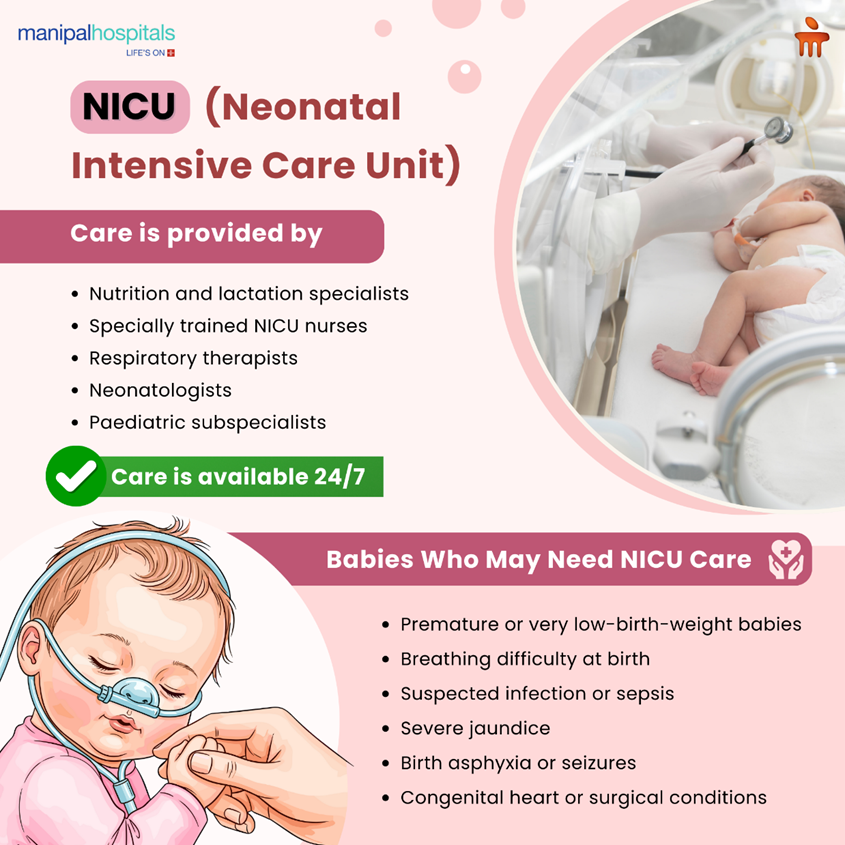
A NICU (neonatal intensive care unit) is a highly monitored area designed to stabilise and treat newborns with medical or surgical issues. A well-run NICU provides everything from short-term monitoring for mild problems to full life support for extremely premature infants. The team includes neonatologists, specially trained neonatal nurses, respiratory therapists, nutritionists, and allied specialists who work together around the clock.
Who Needs NICU Care?
Babies are admitted to the NICU for many reasons. Common reasons include:
-
Being born very early or with very low birth weight (premature babies)
-
Breathing difficulty at birth (for example, respiratory distress syndrome)
-
Suspected or proven infection (sepsis, pneumonia)
-
Major jaundice requiring intensive phototherapy or exchange transfusion
-
Cholestatic jaundice
-
Congenital infections
-
Surgical problems detected before or after birth (for example, intestinal atresia, congenital diaphragmatic hernia, lung malformations, hydronephrosis)
-
Congenital heart disease
-
Neurological concerns, such as seizures or signs of birth asphyxia
-
Inborn error of metabolisms
Early recognition and prompt transfer to a NICU when needed are key; time matters in neonatal medicine.
Core Clinical Areas: What Neonatology Treats
Neonatal care covers a wide set of organ systems. Major sub-disciplines include:
|
Neonatal Pulmonology |
Care for lung and breathing problems such as respiratory distress syndrome (RDS), bronchopulmonary dysplasia, neonatal pneumonia, and airway anomalies. Support may include oxygen therapy, CPAP, and neonatal ventilator support. |
|
Neonatal Cardiology |
Assessment and stabilisation of congenital heart disease, management of neonatal shock, arrhythmias, and pre-/post-operative care for cardiac surgery patients. |
|
Neonatal Neurology |
Management of neonatal seizures, hypoxic-ischaemic encephalopathy, intracranial haemorrhage, and long-term developmental follow-up. |
|
Neonatal Gastroenterology |
Treatment for feeding intolerance, necrotising enterocolitis (NEC), neonatal jaundice, and surgical problems of the gut. |
|
Endocrine, Haematology, and Metabolic Care |
Screening and treatment for congenital hypothyroidism, adrenal disorders, inborn errors of metabolism, anaemia, and neonatal clotting problems. |
|
Neonatal Genitourinary Problems |
AKI needing dialysis, PUV, Antenatal hydronephrosis, bladder extrophy, etc. |
These subspecialty services are integrated so a baby with multi-system needs receives coordinated care.
Life-Saving Skills: Resuscitation, Ventilation, and Transport
Two practical capabilities make a NICU effective:
-
Advanced Neonatal Resuscitation: Delivery room teams trained in neonatal resuscitation stabilise babies immediately after birth, clearing the airway and providing positive-pressure breaths, chest compressions, or medications when needed. Early resuscitation reduces brain injury and improves outcomes.
-
Ventilatory Support: When a baby cannot breathe well alone, support ranges from noninvasive positive pressure to invasive mechanical ventilation. Modern NICUs use neonatal ventilator modes tailored to tiny lungs. For safe transfers between facilities, neonatal transport ventilator systems with an incubator provide continuous support en route.
Equipment and Supportive Care
A NICU uses specialised equipment to recreate and support the infant’s environment:
-
Incubators to control warmth and humidity
-
Oxygen hoods, CPAP, and ventilators for respiratory support
-
Advanced multiparameter monitors for heart rate, breathing, oxygen levels and blood pressure
-
Phototherapy
-
Inhaled nitric oxide therapy
-
Cooling therapy for neonates with birth asphyxia
-
Bedside POCUS (ultrasound) and imaging access for rapid diagnostics
-
Total parenteral nutrition and precision pumps for tiny fluid volumes
-
Blood-product protocols and microbiology support for sepsis care
-
Lactation systems and kangaroo care spaces to support breastfeeding and parent–infant bonding
These tools allow clinicians to manage life-threatening problems while minimising stress to the baby.
3 Levels of NICU Care:
NICUs are often described as Level 1, 2, or 3 (sometimes Level 4 in referral centres), reflecting the intensity of care available:
|
NICU Level 1 |
Care for stable term and late-preterm infants who need minimal support. |
|
NICU Level 2 |
Intermediate care for moderately preterm or moderately ill infants (short-term ventilatory support, IV nutrition). |
|
NICU Level 3 |
Full intensive care for very low-birthweight or extremely preterm infants, complex respiratory support, and surgical stabilisation. |
Understanding the level of care helps families and referring clinicians choose the right place for delivery or transfer.
Outcomes and the Importance of Early Intervention
Advances in neonatology mean that premature babies born at very early gestations survive at rates that were once unimaginable. But survival is only one metric: quality of life, neurodevelopmental outcomes, and family well-being are central goals. Early detection of problems, meticulous supportive care, and developmental follow-up (including therapies and early intervention) markedly improve long-term prospects.
Family-Centred Care: Parents as Partners
Modern NICU practice recognises that parents are part of the care team. Family-centred measures include:
-
Open communication and daily updates.
-
Involving parents in basic caregiving (feeding, nappy changes, kangaroo care) as soon as it’s safe.
-
Lactation support and guidance for breast milk expression.
-
Emotional and psychosocial support, including counselling and peer groups.
Active parental involvement supports bonding and helps with smoother transitions home.
Practical Tips for Parents Facing a NICU Stay
-
Ask for clear, plain-language explanations of the baby’s condition and plan.
-
Keep a small notebook of questions and daily updates; it helps during stressful days.
-
Learn the basics: hand hygiene, signs of infection, and how to hold and comfort your baby.
-
Use lactation support early if you plan to provide breast milk; it benefits both infant immunity and bonding.
-
Prepare for staged discharge planning: the team will outline feeding, immunisations and follow-up visits.
Conclusion
If a newborn baby needs extra help shortly after birth, a modern NICU supported by a team of experienced neonatologists, surgeons, paediatricians, and technologists is the difference between good and exceptional outcomes.
Manipal Hospital Kanakapura Road offers advanced neonatal care, from advanced neonatal resuscitation and mechanical ventilation to surgical stabilisation and family-centred support, ensuring babies born too small or too sick receive evidence-based, compassionate care.
FAQ's
Bring maternal and foetal records (antenatal scans, blood tests), the newborn’s birth summary if already delivered, immunisation details, and a list of current medications. Bring transfer notes and any imaging or lab reports if you've received a referral from another hospital.
The NICU provides incubators, advanced ventilation (invasive and noninvasive), bedside POCUS, TPN, blood product support, neonatal transport ventilators, and protocols for surgical stabilisation and neonatal resuscitation.
Admission includes a focused assessment, stabilisation (airway, breathing, circulation), initiation of monitoring and support (oxygen, IV fluids, nutrition), and a family meeting to explain the care plan. Regular updates and parental involvement in routine care are part of the pathway.
NICU care is needed if a baby is premature, has respiratory distress, requires respiratory support, has surgical conditions, shows signs of sepsis, has significant feeding intolerance, or needs specialised monitoring and interventions.
Signs include regular uterine contractions, leaking fluid, vaginal bleeding, and pelvic pressure or backache before 37 weeks. Antenatal teams should be contacted immediately for assessment and possible transfer to a facility with an appropriate NICU.
Share this article on:


.webp "Golden Hour Care for Preterm Neonates: Life-Saving First Steps")