8 Min Read
Could those unusual movements, pauses in breathing, or repeated staring episodes in a newborn be something serious? Neonatal seizures are among the most common neurological emergencies seen in the first 28 days of life and often signal an underlying medical condition that requires immediate attention. In India, these seizures affect approximately 3-4 per 1,000 live births, with higher rates in preterm infants reaching up to 132 per 1,000. Unlike seizures in older children, neonatal seizures can be subtle and easily missed, yet they reflect abnormal electrical activity in the developing brain.
This blog explains the common presentations, newborn seizure causes, practical diagnostic steps, including the role of neonatal EEG, evidence-based neonatal seizure treatment, short- and long-term outlook, and clear guidance on when to seek urgent help from a neonatal specialist.
Synopsis
- What are Neonatal Seizures?
- Why Immediate Attention Matters?
- Common Newborn Seizure Causes
- How Neonatal Convulsions May Look
- Diagnosing Neonatal Seizures
- Neonatal Seizure Treatment Principles
- Role of Continuous Monitoring
- Short-term and Long-term Outlook
- Family Counselling and Follow-up
- When to Seek Immediate Medical Attention?
- Preventive Measures in Perinatal Care
- Conclusion
What are Neonatal Seizures?
Neonatal seizures are abnormal bursts of electrical activity in the newborn brain that produce clinical changes. These events can be subtle or obvious. In newborns, the brain is developing rapidly, and seizures often indicate an underlying problem that needs immediate assessment. The term "neonatal convulsions" is also used when seizures produce visible movements such as jerking an arm or leg, cycling movements, or rhythmic blinking.
Why Immediate Attention Matters?
Seizures in the neonatal period are markers of brain stress or injury. They can be caused by metabolic problems, infection, injury, or lack of oxygen. When not promptly identified and treated, seizures can increase the risk of brain injury and affect neurodevelopment. Timely evaluation helps identify reversible newborn seizure causes and start appropriate neonatal seizure treatment as soon as possible.
Common Newborn Seizure Causes
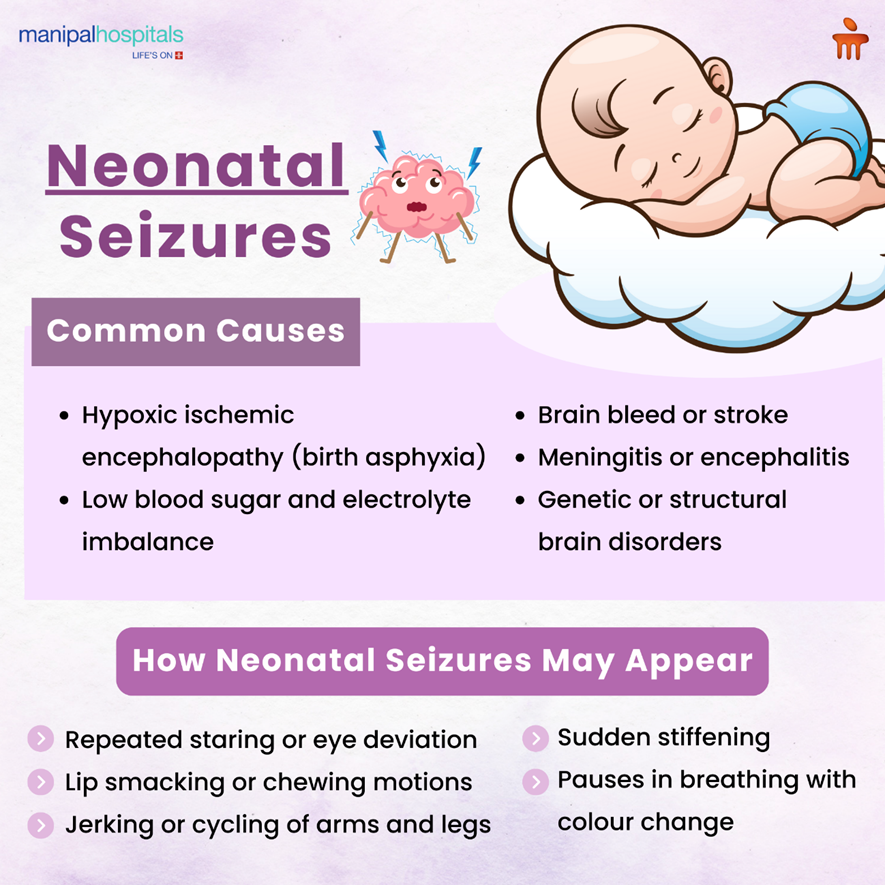
Understanding likely causes helps prioritise tests and treatment. The most frequent newborn seizure causes include:
-
Hypoxic ischemic encephalopathy related to birth asphyxia
-
Metabolic disturbances such as hypoglycaemia and electrolyte imbalance
-
Intracranial haemorrhage or stroke
-
Central nervous system infections like meningitis or encephalitis
-
Genetic or structural brain disorders
Work-up targets these causes quickly so that treatment addresses both the seizure and its trigger.
How Neonatal Convulsions May Look
Neonatal seizures differ from those of older children. Watch for seizure symptoms in newborn babies:
-
Subtle signs such as eye deviation, fixed staring, or lip smacking
-
Limb jerks or cycling of arms and legs
-
Apnoea or irregular breathing with colour change
-
Repetitive chewing or sucking movements
-
Generalised stiffening or rhythmic jerking
Not all abnormal movements are seizures. Tremor, jitteriness from low blood sugar, or normal neonatal startle reflex can mimic seizures. Clinical context and testing are essential.
Diagnosing Neonatal Seizures
Diagnosis combines clinical assessment and targeted tests. The neonatal EEG is the cornerstone for confirming electrical seizure activity and guiding treatment. Blood tests identify metabolic causes. Neuroimaging, such as cranial ultrasound or MRI, detects haemorrhage, stroke, or malformations. Cerebrospinal fluid analysis is necessary when infection is suspected.
|
Test |
Purpose |
When It Is Ordered |
|
Blood glucose and electrolytes |
Detect hypoglycaemia and metabolic imbalance |
At first, suspicion of seizure |
|
Serum calcium and magnesium |
Identify electrolyte causes |
Emergency baseline tests |
|
Blood culture and CRP |
Screen for infection |
If fever, maternal risk factors, or ill baby |
|
Cranial ultrasound |
Look for haemorrhage or structural issues |
Immediate, bedside imaging |
|
MRI brain |
Detailed structural assessment |
When ultrasound shows abnormal or persistent seizures |
|
Neonatal EEG |
Confirm electrical seizures and measure burden |
As soon as available, guides therapy |
|
CSF analysis |
Diagnose meningitis or encephalitis |
If infection is suspected after stabilisation |
A structured diagnostic pathway reduces delays and improves the chance of identifying treatable causes.
Neonatal Seizure Treatment Principles
Effective neonatal seizure treatment focuses on rapid stabilisation and treating the underlying cause. Key steps include:
Stabilise airway, breathing, and circulation. Ensure normal oxygen and temperature.
-
Immediately check and correct blood glucose and electrolytes. These reversible causes are common.
-
If seizures continue after correction, start anticonvulsant therapy as guided by the neonatologist. First-line medications often include phenobarbital or levetiracetam. The choice depends on local protocols, drug availability, and the infant’s condition.
-
Use neonatal EEG to verify response and to detect subclinical seizures that lack obvious movements.
-
Treat infection promptly with appropriate antibiotics if sepsis or meningitis is suspected.
-
If hypoxic ischemic encephalopathy is the cause, consider therapeutic hypothermia within the specified time window, administered in specialised centres.
Early and protocolised neonatal seizure treatment lowers seizure burden and supports better neurodevelopmental outcomes.
Role of Continuous Monitoring
Seizures in neonates can be electrographic only, meaning they appear on the neonatal EEG without clinical signs. Continuous video EEG monitoring, when available, is the most reliable way to detect and quantify seizure activity. This monitoring allows the treating team to titrate medications, reduce unnecessary drug exposure, and identify treatment-resistant seizures quickly.
Short-term and Long-term Outlook
Short-term outcomes depend on the cause, seizure burden, and the promptness of treatment. Babies with transient metabolic causes often recover fully with correction. Those with hypoxic ischemic encephalopathy, extensive haemorrhage, or genetic conditions have higher risks for persistent neurological problems. Long-term follow-up should include developmental monitoring, neurological assessment, and early intervention services if delays are noted.
Family Counselling and Follow-up
Clear communication with parents is vital. Explain the likely cause, the treatment plan, and what the team will monitor. Arrange follow-up with neonatology, paediatric neurology, and early developmental services. Where appropriate, genetic testing and counselling may be recommended.
When to Seek Immediate Medical Attention?
Seek urgent evaluation if a newborn shows repetitive movements, abnormal breathing, altered responsiveness, or colour change. Time matters. Early hospital assessment enables rapid diagnosis and initiation of neonatal seizure treatment.
Preventive Measures in Perinatal Care
Reducing the risk of seizures starts with good perinatal care:
-
Adequate intrapartum monitoring helps detect fetal distress early and minimise the risk of hypoxic ischemic encephalopathy.
-
Prompt correction of maternal and neonatal metabolic issues.
-
Early recognition and treatment of maternal infections.
-
Timely vaccination and infection control measures.
These measures reduce the incidence of seizure-causing events.
Conclusion
Neonatal seizures are a medical emergency that requires rapid assessment, targeted diagnostics including neonatal EEG, correction of reversible causes, and timely anticonvulsant therapy. The underlying reason, seizure burden, and speed of treatment determine outcomes. If your newborn displays abnormal movements or breathing, seek immediate care.
For specialised neonatal care, continuous EEG monitoring, and evidence-based neonatal seizure treatment, contact Manipal Hospital Kanakapura Road. Our neonatal intensive care unit and neonatal neurology team provide rapid assessment, advanced monitoring, and coordinated follow-up to support the best possible outcomes.
Book neonatal assessment and monitoring at Manipal Hospital Kanakapura Road today for prompt, expert care.
FAQ's
Yes. Some seizures are electrographic only and require a neonatal EEG to detect. Continuous monitoring helps identify these events.
Low blood sugar and electrolyte disturbances are common and often reversible with neonatal seizure treatment focused on correction.
No. The outcome depends on the cause and the speed of treatment. Many babies recover fully if the cause is identified and treated early.
Duration varies. If seizures are provoked by a reversible cause and resolve, treatment may be short. For structural or genetic causes, longer therapy and specialist follow-up are often needed.
Follow-up should start early after discharge and continue through infancy and early childhood. The neonatal team will arrange neurology and developmental appointments based on the baby’s risk.
Share this article on:


.webp "Golden Hour Care for Preterm Neonates: Life-Saving First Steps")