8 Min Read
Ever felt frustrated by a diet or workout plan that works at first but is hard to maintain?
Obesity is a complex medical condition influenced by hormones, metabolism, and appetite control, not just lifestyle alone. Recent medical advances have introduced incretin-based therapy for obesity, a treatment that works by regulating hunger signals, slowing digestion, and improving blood sugar control. These medicines are changing how doctors approach long-term obesity treatment.
In this blog, let us explore how obesity incretin therapy works, who may benefit, the expected results, and the safety considerations surrounding this new trend for weight loss therapy.
Synopsis
- What are Incretins for Weight Loss?
- Who is a Good Candidate for Incretin-Based Therapy?
- What Results Can Be Expected?
- Incretin Therapy vs. Bariatric Surgery
- Common Incretin Agents and How They Are Used
- Safety, Side Effects and Monitoring
- Combination Strategies and the Future
- Practical Steps For People Considering Incretin Therapy
- Conclusion
What are Incretins for Weight Loss?
Incretin hormones and weight loss are a practical concept: incretins (notably GLP-1 and GIP) are gut-derived hormones released after eating that signal the pancreas to release insulin and tell the brain to reduce appetite. Medical science has turned these signals into drugs, for example, GLP-1 receptor agonists, that reproduce and amplify the appetite-suppressing and metabolic effects.
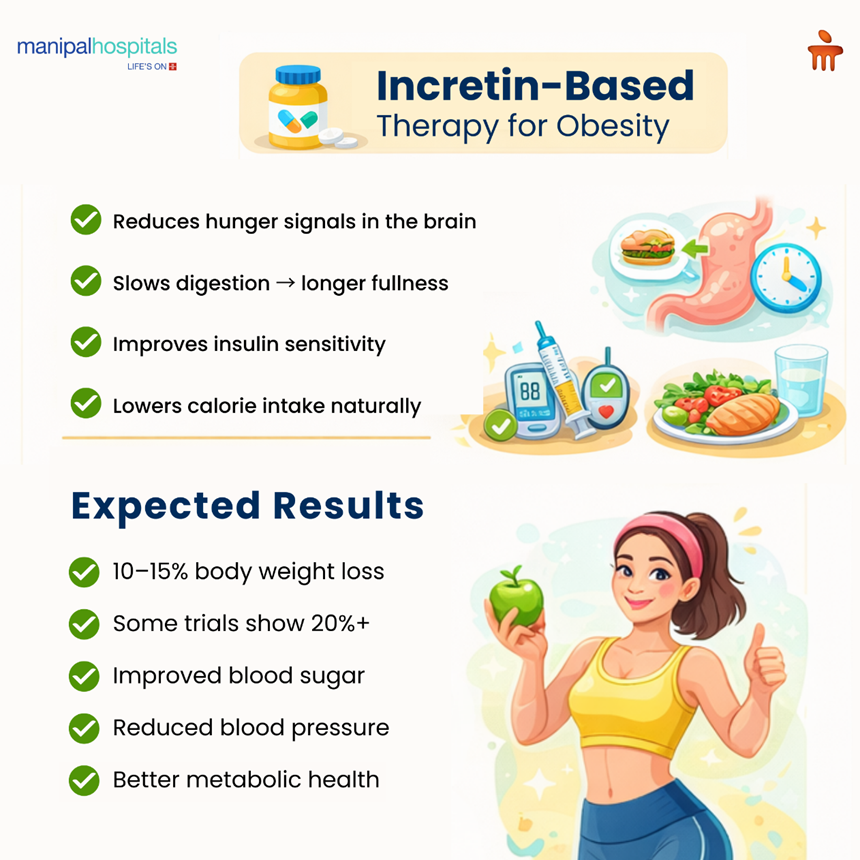
These hormones act as communication messengers between the stomach, pancreas, and brain to control appetite and metabolism. Key effects relevant to obesity:
-
Reduce appetite and caloric intake.
-
Slow gastric emptying, increasing satiety.
-
Improve insulin sensitivity and lower blood glucose.
-
Potentially shift energy use and reduce fat mass.
These mechanisms explain why incretin-based therapy for obesity helps many people lose clinically meaningful weight.
Who is a Good Candidate for Incretin-Based Therapy?
Not everyone with excess weight requires medication. Doctors recommend incretin therapy only after carefully assessing medical history, weight-related health conditions, and previous attempts at lifestyle weight loss. The best candidates for obesity incretin therapy are people who:
-
Have a body mass index (BMI) above guideline thresholds (commonly BMI ≥30, or ≥27 with obesity-related conditions).
-
Have tried structured lifestyle interventions without adequate weight loss.
-
Have obesity-related health issues (type 2 diabetes, hypertension, sleep apnoea) that could improve with weight reduction.
-
Want a non-surgical, longer-term option and commit to follow-up care.
Clinicians assess medical history, cardiovascular risk, pregnancy plans, and medication interactions before recommending treatment. A shared decision considers benefits, side effects, and cost.
What Results Can Be Expected?
One of the most common questions people ask is how much weight loss these medications can realistically achieve and how quickly results may appear. Results vary by drug and dose, but common outcomes include:
-
Modest to substantial weight loss over months (often 10–15% body weight, and in some trials 20%+).
-
Improvements in blood pressure, glycaemic control, and markers of cardiometabolic health.
-
Weight regain if therapy is stopped in many patients, highlighting the need to view this as long-term obesity treatment rather than a short course.
-
Weight loss usually occurs gradually and stabilises over time, which improves long-term sustainability.
Real-world outcomes depend on adherence, background lifestyle change, and individual biology.
Incretin Therapy vs. Bariatric Surgery
Many people ask about incretin therapy vs bariatric surgery: both reduce weight and improve metabolic health, but they differ in mechanism, magnitude, durability, and risk.
|
Feature |
Incretin-Based Therapy |
Bariatric Surgery |
|
Typical weight loss |
10–25% depending on drug/dose |
20–35%+ depending on procedure |
|
Time to effect |
Weeks to months |
Rapid initial loss in months; stabilises over 12–24 months |
|
Mechanism |
Hormone mimic, appetite + metabolism |
Anatomical + hormonal changes (restriction/malabsorption) |
|
Reversibility |
Generally reversible (stop drug) |
Usually irreversible (some procedures are reversible) |
|
Risks |
GI side effects, pancreatitis risk low; long-term safety data growing |
Surgical complications, nutritional deficiencies, need for lifelong supplements |
|
Cost and access |
Ongoing medication cost; out-of-pocket considerations |
One-time surgical cost; insurance coverage varies |
|
Best candidates |
Those seeking a non-surgical option or not eligible for surgery |
Severe obesity or when rapid, larger weight loss is required |
Common Incretin Agents and How They Are Used
Several medication-based incretin-based therapies for obesity are now available and are prescribed in carefully monitored treatment plans. These medications are usually started slowly and adjusted based on tolerance and response. Typical treatment features:
-
Start at a low dose, then escalate to reduce side effects.
-
Regular follow-up is necessary to assess weight, blood pressure, glucose, and gastrointestinal tolerance.
-
Concurrent lifestyle support (diet, activity) improves outcomes.
-
Consider long-term commitment: stopping commonly leads to partial weight regain.
Most medications are given as weekly injections, though some oral options are available depending on the treatment plan. Discussing options under the supervision of an endocrinologist or obesity specialist ensures safe use.
Safety, Side Effects and Monitoring
Obesity incretin therapy is usually well-tolerated but requires monitoring;
-
Common side effects: nausea, vomiting, diarrhoea, and constipation, usually transient during dose escalation.
-
Less common concerns: gallbladder disease, pancreatitis (rare), and effects on heart rate; careful screening and monitoring mitigate risks.
-
Long-term safety: ongoing studies track cardiovascular outcomes and durability.
-
Pregnancy: Incretin drugs are not recommended in pregnancy; pregnancy plans must be discussed before starting them.
Routine monitoring includes weight, glycaemic markers, renal and liver function, and addressing side effects promptly.
Combination Strategies and the Future
The future of long-term obesity treatment likely includes combination approaches:
-
Incretin agents plus behavioural programs and exercise.
-
Combining incretin therapy with other weight-reducing medications in carefully studied regimens.
-
Using incretin therapy as a bridge to surgery for high-risk patients to reduce operative risk.
-
Precision medicine approaches to predict who benefits most.
These strategies aim to enhance efficacy while minimising adverse effects.
Practical Steps For People Considering Incretin Therapy
If thinking about incretin-based therapy for obesity, practical steps help:
-
Get a full medical assessment, BMI, cardiovascular risk, diabetes status, and medications.
-
Discuss goals and timeline with the clinician: target weight loss and functional improvements.
-
Understand cost and access, including whether local programmes provide support.
-
Plan for regular follow-up visits for dose escalation and side-effect management.
-
Combine therapy with structured lifestyle support; the drug enhances but does not replace healthy habits.
This approach frames obesity incretin therapy as part of a sustained care plan.
Conclusion
Incretin-based therapy for obesity is a powerful, evidence-backed option that reduces appetite, improves metabolism, and supports meaningful weight loss when combined with lifestyle changes. For many people, it offers a non-surgical route to improved health, while for others, it complements or precedes bariatric surgery. Decisions should be personalised, with clear monitoring and long-term follow-up. For expert assessment and a personalised obesity care plan, consult an experienced endocrinologist at Manipal Hospitals Kanakapura Road. You can also contact Manipal Hospitals Kanakapura Road for multidisciplinary support and guidance on long-term obesity treatment.
FAQ's
Typical early appetite reduction and modest weight loss appear within weeks, with more substantial loss over several months as the dose increases.
Weight loss can be maintained while continuing therapy and lifestyle changes. Stopping medication often leads to partial weight regain; consider these drugs as part of long-term obesity treatment when appropriate.
Yes, many incretin agents were first developed for diabetes to improve blood sugar control while reducing weight; coordination with diabetes care is essential.
For some people, yes, especially those preferring non-surgical routes, but surgery remains the most effective for very high levels of weight loss and metabolic improvement. Discuss incretin therapy vs. bariatric surgery with a specialist.
Coverage varies. Discuss costs and potential reimbursement with the clinic, and consider programs that combine medication with lifestyle counselling to improve value.
Share this article on: