7 Min Read
.webp "Precision in the OR: How Robotic Surgery is Changing Cancer Care")
Surgery has always played a central role in cancer treatment. Over the past two decades, the operating room has shifted from large open incisions to small keyhole procedures and now to a world shaped by precise robotic systems. Many people feel surprised when they learn how far the field has come. The idea that a surgeon can work with tiny instruments guided by a machine sounds futuristic, yet it has become a practical part of modern care. This progress has supported safer operations, quicker recovery, and a gentler journey for people who need treatment. As we look more closely at how robotic surgery in cancer care grows, it helps us understand how this approach changes outcomes and eases a very stressful time for patients and families.
Synopsis
Understanding What Makes Robotic Surgery Different
Many wonder what actually sets robotics apart from regular operations. Some imagine robots working on their own, but that is far from the truth. Robotic surgery in cancer care is always guided by the surgeon. The system simply gives the surgeon better reach, finer movements, and clearer vision.
How does the robotic system work?
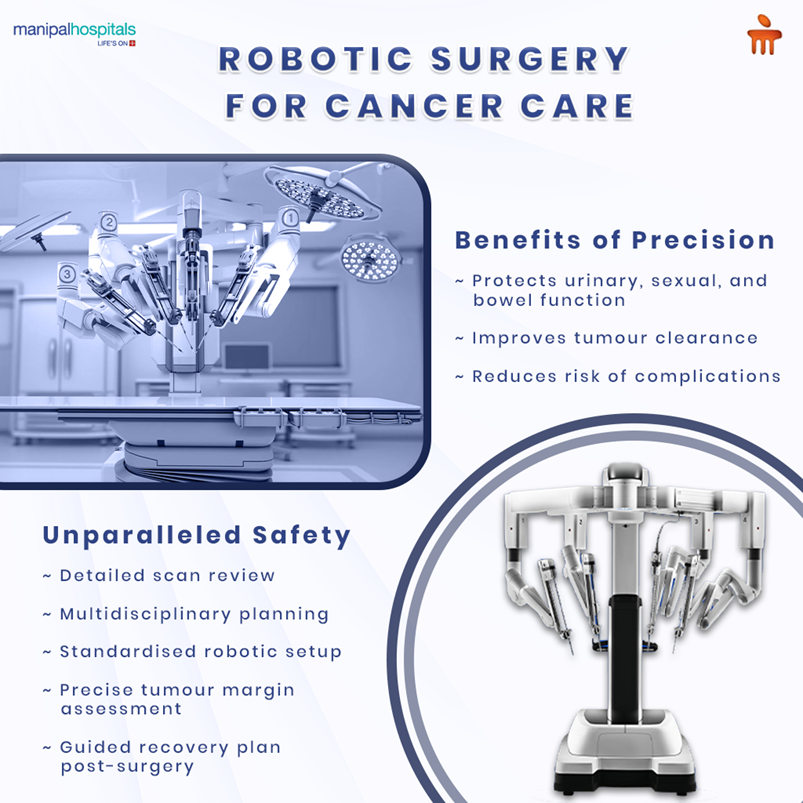
The robotic system becomes like a steady and flexible extension of the surgeon’s hands. It gives:
-
A magnified 3D view that helps the surgeon see delicate tissues more clearly
-
Tremor-controlled tools that offer more movement than the human wrist
-
Smooth control in tight areas like the abdomen, pelvis, and chest
-
Small skin openings that reduce bleeding, pain, and healing time
These features create a surgery that feels smoother for the surgeon and safer for the patient. In many cases, the surgeon can protect more of the important nerves and structures that support daily life. This becomes even more meaningful during robotic surgery in cancer care, where every millimetre of precision matters.
After understanding this, the picture becomes clearer. It is not technology taking over. It is technology supporting human skill, opening the door for less pain, early recovery, and better prognosis.
Why Precision Matters More in Cancer Surgery?
Cancer surgeries involve delicate decision-making. A small movement can influence pain levels, healing time, and long-term function. That is why accuracy makes such a difference. During pelvic procedures, careful handling of the nerves helps preserve urinary and sexual function. During surgeries for abdominal organs, protecting the blood supply and healthy tissues supports better recovery. For this reason, robotic surgery in cancer care continues to gain trust among doctors and patients.
Where do robotic methods help the most?
Robotic systems offer reliable support in many cancer-related operations:
-
Abdominal and pelvic organ removal that needs steady handling and attention to fine anatomy
-
Prostate and kidney cancer procedures that require clean clearance with a smooth recovery
-
Uterine and bladder cancer surgeries, where deep areas can be hard to access
People often feel grateful for the start-to-finish experience. Smaller cuts bring less discomfort. Reduced bleeding means fewer complications. More targeted movements protect tissues. These parts of advanced surgical oncology keep patients more comfortable and support healing that feels kinder on the body.
The impact becomes even stronger when all benefits come together. Shorter time in the hospital. Earlier ability to move. Fewer wound concerns. Many patients notice that they return to routines sooner than expected. When seen as a whole, this is why minimally invasive cancer surgery continues to change how cancer treatment feels for families.
Safety Through a Structured Process
Technology alone does not create beneficial results. A safe environment grows from planning and a clear step-by-step process. This is why many centres build strong routines around robotic surgery in cancer care.
What a structured plan usually includes:
-
Careful review of scans and tests
-
Discussion between different specialists
-
Proper robotic setup for each type of tumour
-
Constant evaluation of tissue margins
-
Post-surgery recovery plans that encourage movement and healing
This approach supports consistency. It also allows each surgeon to follow a pattern that protects patient safety. Many teams working in advanced surgical oncology focus on developing these reliable steps so outcomes stay stable. This habit gives patients confidence. It also helps surgeons deliver care that feels thoughtful and coordinated.
With this kind of planning, robotic cancer treatment feels like more than a modern tool. It becomes a steady option that brings together helpful technology and the real skill of the surgeon.
How Robotic Surgery Shapes the Patient Experience
For many people, the difference becomes noticeable as soon as they wake up after surgery. They do not see large cuts or heavy dressings. They often sit up earlier and feel ready to walk with support. These small milestones can mean a lot during recovery.
Common experiences shared by patients
-
Moving around within the first day
-
Fewer wound problems
-
Shorter stay in the hospital
-
Quicker return to regular life and work
These outcomes match what many families hope for. When care becomes kinder and healing feels faster, trust grows. This is why robotic surgery in cancer care has become an important part of treatment conversations. People want an approach that treats the disease but also cares for the person behind it.
Many stories reflect this change. Someone might say they expected weeks of pain but found they could walk comfortably in a few days. Another person might mention how much easier it felt to get back to routine tasks. These small victories show how minimally invasive cancer surgery supports daily life during a very emotional time.
The Human Touch Behind Robotic Surgery
Even though robotics feels advanced, every decision still comes down to human judgment. Surgeons guide every movement. They decide what to preserve. They shape the plan. This blend of skill and technology helps build trust. Families often feel comfort knowing that the surgeon stays fully in control.
Why does empathy take the center stage?
Cancer treatment involves many feelings. People worry about the diagnosis, the procedure, and what happens after. A warm conversation can make the process feel lighter. Surgeons often spend time talking through every step. They explain the tools in simple words. They share how robotic cancer treatment offers steady support during complicated surgeries.
This balance of science and compassion helps patients feel safe. It also brings them into the process. They feel informed. They feel valued. They feel part of each choice.
Bringing Together Science, Comfort, and Healing
The future of robotic surgery in cancer care shows a clear pattern. Surgeries become safer. The surgeon gains improved control. Patients heal faster. Families feel reassured. This does not remove the seriousness of cancer, but it supports a smoother path.
What the shift means for the future?
-
More accurate operations
-
Better preservation of healthy tissue
-
Smaller cuts that heal faster
-
Growing confidence in robotic methods
-
More comfort during recovery
These parts of advanced surgical oncology work together to improve outcomes. As more people experience these benefits, interest continues to grow across hospitals and communities.
The future also encourages a wider move towards minimally invasive cancer surgery. This approach helps reduce the stress that often comes with treatment. It takes the idea of gentle care and brings it into the operating room.
With time, further refinements will arrive. Tools may become smaller. Vision may become even clearer. Movement may become even more refined. All these advancements will continue to support surgeons in delivering safe and effective care.
Looking Ahead With Confidence
As we reflect on the role of robotics in cancer treatment, one message feels steady. The aim is simple. Surgeons will be able to treat complex conditions with a gentle touch. To bring science and compassion together. To help patients move through a difficult experience with more ease.
If you feel ready to explore how these methods support treatment, you can speak with the cancer specialists at Manipal Hospital Kanakapura Road. They guide people with care, explain options in a clear way, and help create a plan that matches each person’s health and comfort.
FAQ's
Robotic surgery in cancer care uses small tools and a camera that the surgeon controls from a console. It helps the surgeon work with steady and fine movements. Many patients find the whole process gentler with quicker recovery.
With robotic cancer treatment, the surgeon can see the tissues more clearly and move the tools with more precision. The outcome often means smaller cuts and less pain. People usually feel they get back to their routine life a little earlier.
Yes, minimally invasive cancer surgery is considered safe for many cancers when guided by an experienced team. The smaller openings help reduce bleeding and wound concerns. Patients often notice smoother healing and more comfort during recovery.
Minimally invasive cancer surgery often brings less discomfort, quicker movement after surgery, and shorter hospital stays. Many patients say they feel more confident during healing because the wounds are smaller. It can also reduce the chance of certain complications.
At times, robotic cancer treatment may take a bit more time to set up in the beginning. Once the system is ready, the actual surgery often moves smoothly because the surgeon can work with clearer vision and finer movements. Many people feel the quality of recovery makes the time worthwhile.
Share this article on: