8 Min Read
The phrase “cancer is curable if detected early” is not just a hopeful statement; it is a medical fact supported by decades of global research. Early-stage cancers behave differently from advanced ones: they are smaller, less aggressive, haven’t spread, and respond dramatically better to treatment. So, it is often easier to treat and, in many cases, even cure. In many cancers, early cancer detection raises survival rates dramatically to over 90%. This is why screening, awareness, and timely medical attention are among the most powerful tools we have in the fight against cancer.
This blog will walk you through early detection, causes, diagnosis, treatment options, and comprehensive care provided with advanced surgical technology, multidisciplinary teams, and modern infrastructure.
Synopsis
- Early Cancer Detection: Does It Really Matter?
- Symptoms Often Appear Late—Screening is Key
- Cancer Screening Tests
- How Early Detection Improves Survival and Cure Rates?
- Listen to Your Body: Warning Signs Matter
- Most Common Cancers with Reliable Screening Tests
- Advanced Surgical Techniques
- Multidisciplinary Cancer Care
- The Role of a Surgical Oncologist
- Conclusion
Early Cancer Detection: Does It Really Matter?
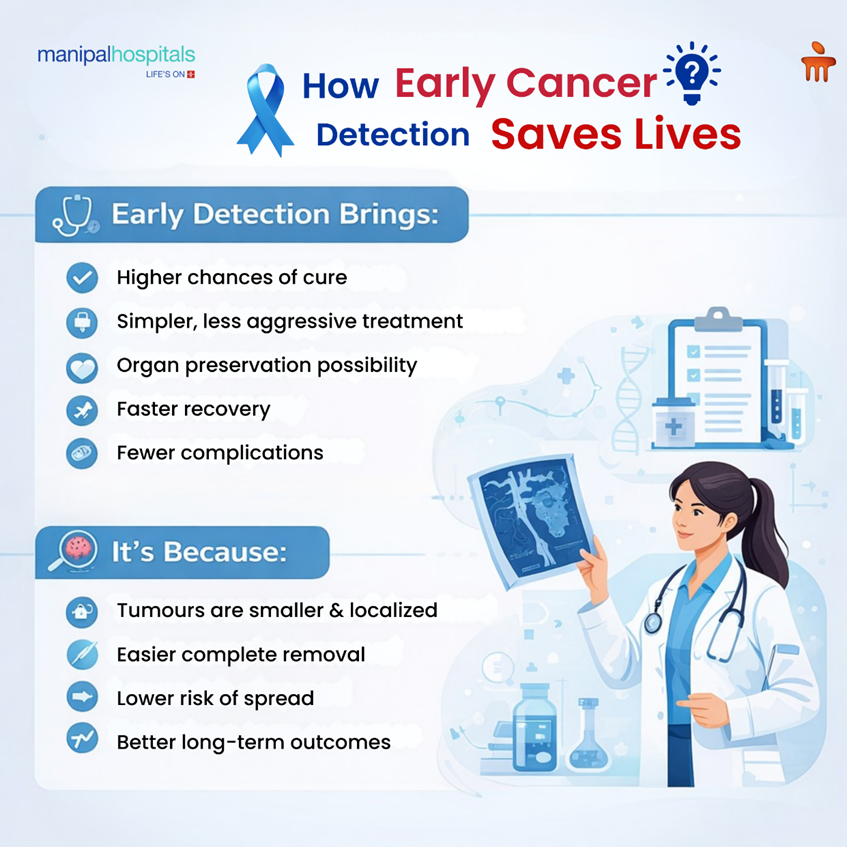
One of the most important messages patients should understand is that many cancers have significantly higher cure rates when detected early. Early-stage cancers behave very differently from advanced cancers. Some benefits of early cancer detection include:
-
A significant rise in cure rates.
-
Treatment may involve simpler surgeries.
-
Procedures that save organs have become possible.
-
Recovery is typically faster, with fewer complications.
Symptoms Often Appear Late—Screening is Key
Many cancers do not present with symptoms initially, so individuals may feel healthy while a tumour grows. Regular consultations and greater awareness can support early detection. Examples include:
-
Early-stage breast cancer has survival rates above 90-95%.
-
Surgery alone can often cure colon cancer in its early stages.
-
Early cervical cancer can often be treated effectively with surgery.
-
Early head and neck cancers can also be cured very well.
Cancer Screening Tests
Screening plays a key role in identifying cancer before symptoms appear. These tests are especially useful for people at higher risk due to age, lifestyle, or family history.
Some commonly recommended screenings include:
-
Mammograms for breast cancer
-
Pap smears for cervical cancer
-
Colonoscopy for colorectal cancer
-
Low-dose CT scans for lung cancer in high-risk individuals
Regular screening improves the chances of detecting cancer at an early, treatable stage based on individual risk factors.
How Early Detection Improves Survival and Cure Rates?
Early detection plays a key role in improving cancer outcomes. When cancer is found at an early stage, it is often limited to one area and is easier to treat effectively. This leads to:
-
Higher chances of complete tumour removal
-
Reduced need for aggressive treatments
-
Lower risk of cancer spread
-
Better long-term survival rates
In many cases, early-stage cancers can be treated successfully with surgery alone or less intensive therapies.
Listen to Your Body: Warning Signs Matter
If symptoms last beyond a few weeks, consult a specialist. If you experience any of the following, see a surgical oncologist right away:
-
Persistent fatigue
-
A lump or swelling anywhere in the body
-
Changes in bowel habits
-
Persistent cough or hoarseness
-
Unusual bleeding
-
Difficulty swallowing
-
Unexplained long-standing pain
These symptoms can have non-cancer causes, but seeing a specialist enables early, effective treatment.
Most Common Cancers with Reliable Screening Tests
The cancer surgery specialist in Kanakapura Road, Bangalore, performs surgery for several common cancers, including:
Breast Cancer
Breast cancer is common among women. Mammography enables earlier, more effective surgery with breast conservation.
Cervical Cancer
Early detection is vital for successful intervention. Routine screening through Pap smears or HPV tests allows for the identification of precancerous changes, enabling treatment even before cancer fully develops.
Colon Cancer
Cancers of the large intestine can often be prevented or caught early. A Colonoscopy or a FIT test (Fecal Immunochemical Test) helps in detecting polyps or early-stage malignancy, improving long-term outcomes.
Lung Cancer
For individuals with a history of heavy smoking, a Low-dose CT scan is the primary tool for screening. This specialized imaging can spot small abnormalities in the lungs that are not visible on a standard X-ray.
Prostate Cancer
Early screening for men often involves the PSA (Prostate-Specific Antigen) test. Monitoring these levels through a simple blood test helps clinicians assess the risk and determine if further diagnostic steps are necessary.
Following imaging, biopsy, and multidisciplinary consultation, each treatment plan is individualised for the patient.
Advanced Surgical Techniques
Cancer surgery has advanced significantly over the past two decades, with many procedures now utilising minimally invasive techniques. A cancer surgery specialist in Kanakapura Road, Bangalore, uses advanced techniques for better outcomes and quicker recovery.
Minimally Invasive Cancer Surgery
-
Less visible scars from surgery
-
Less bleeding
-
Less pain after surgery
-
Shorter hospital stays
-
Faster postoperative recovery
-
Organ-Preserving Surgery
For some early cancers, surgeons can remove the tumour while sparing nearby tissues and organs, preserving normal body function.
Precision Tumour Removal
To lower the risk of recurrence, surgery removes the tumour along with some surrounding tissue. Modern imaging and planning help improve precision.
Multimodal Treatment Integration
Surgery is often combined with chemotherapy, targeted therapy, or radiation. A team approach helps decide the best treatment plan.
Multidisciplinary Cancer Care
Cancer treatment is best when specialists work together. A full team at Manipal Hospital Kanakapura Road supports surgical oncology care and offers the best cancer surgery treatment.
This team includes:
-
Medical oncologists
-
Radiation oncologists
-
Radiologists and experts in imaging
-
Onco-pathologists
-
Pain specialists and anaesthesiologists
-
Nurses who work in oncology and rehabilitation teams
-
Counsellors in psycho-oncology
This team-based approach addresses all aspects of patient health in treatment planning. Collaborative discussions between physicians and patients regarding test results, treatment options, and recovery plans contribute to improved care.
The Role of a Surgical Oncologist
A surgical oncologist is a doctor who performs operations to treat cancer, but their responsibilities involve much more than just surgery. Here are some of the main responsibilities of a surgical oncologist:
-
Cancer Diagnosis: Sometimes, surgery is needed to get a biopsy, which is a small piece of tissue that helps confirm whether a tumour is cancerous.
-
Stages of Cancer: Staging determines the extent of cancer spread, which helps doctors select the most appropriate treatment plan.
-
Tumour Removal: Surgical excision is highly effective for many early cancers.
-
Reconstructive Planning: Surgeons use reconstructive techniques, such as rebuilding or repairing damaged body parts, to preserve organ appearance and function as much as possible.
-
Multidisciplinary Treatment Planning: Surgery is often used along with chemotherapy, targeted therapy, or radiation. Surgical oncologists collaborate with other specialists to decide the best treatment plan.
Conclusion
In the last few years, cancer care has come a long way. Today, many cancers can be treated, especially when found early. The credit goes to advanced surgical methods, improved diagnostics, and treatment plans tailored to each patient. At our Manipal Comprehensive Cancer Centre, Manipal Hospital Kanakapura Road, we collaborative team of top surgical oncologists in Kanakapura Road, Bangalore, supported by advanced technology and interdisciplinary collaboration. Treatment aims to remove cancer, restore health, protect quality of life, and support recovery confidence.
FAQ's
Yes. Early cancer detection usually allows for less aggressive treatments, which may reduce side effects.
Yes. Healthy habits like eating well, staying active, and managing stress can make your body stronger, help you recover, and lower the chance of cancer coming back.
No, not always. Some early cancers can be treated with just surgery, while others might need a small amount of chemotherapy to ensure complete removal.
Yes. Support from family, friends, or counsellors can ease anxiety, help you stay strong, and make it easier to get through treatment and recovery.
Yes. Early cancer detection often means fewer procedures, shorter hospital stays, and less medication, making treatment more manageable and affordable.
Share this article on: