7 Min Read
Ever noticed painless swelling, discolouration, or a lump in your breast that doesn't go away?
Breast cancer, a leading concern for women globally, has emerged as the most common cancer among Indian women. It accounts for nearly 27% of all cancers, with over 200,000 new diagnoses annually, and it is rising due to lifestyle shifts. Advances in early detection through mammograms, self-exams, and awareness have boosted survival rates significantly. In this blog, you will learn about the early signs of breast cancer, its stages, early detection, and when to see an oncosurgeon.
Synopsis
Breast Cancer Definition
Breast cancer occurs when the breast cells grow out of control and form a lump, often called a ‘breast tumour’. If not treated quickly, these cancer cells can stay in the breast or spread to nearby lymph nodes and other parts of the body. The two most common types of breast cancer are:
-
Ductal Carcinoma: It begins in the milk ducts.
-
Lobular Carcinoma: It starts in the milk-producing glands.
Breast cancer is more common after 50, but it can occur at younger ages. In rare cases, it can also affect men.
Signs of Breast Cancer
Recognising breast cancer symptoms early is essential. Symptoms can vary from person to person, and some people may not notice any changes at first.
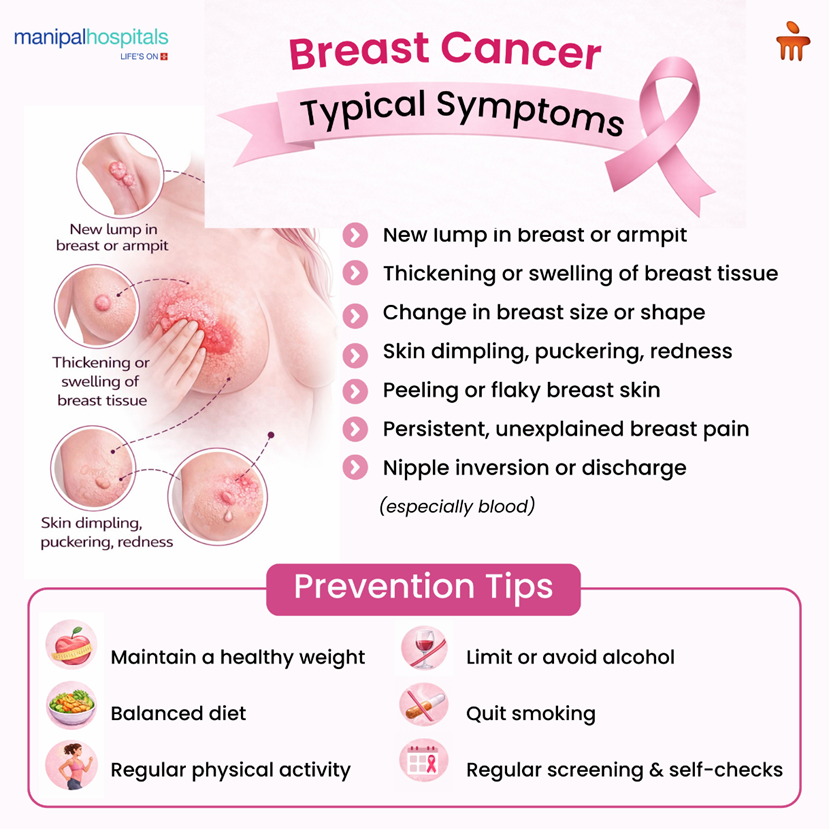
Some of the most common signs of breast cancer in women are:
-
A new lump or thickening in the breast or armpit
-
Changes in the size or shape of the breasts
-
Peeling or flaky skin on the nipple, areola, or breast
-
Redness, dimpling, or puckering
-
Nipple discharges, especially blood
-
Uncontrollable and unexplained breast pain
While not all lumps are cancerous, you should consult an oncology doctor promptly if you notice any new or unusual changes.
Causes of Breast Cancer
There is no single cause of breast cancer, but doctors have identified several factors that can increase the risk. These include
-
Age: The risk goes up as women turn 50 years of age or above.
-
Family history and genetics: Inherited gene changes such as BRCA1 and BRCA2 raise the chance of developing breast cancer, though most cases occur without a known inherited mutation. Genetic testing and counselling are available for those with a strong family history.
-
Hormonal factors: Longer lifetime exposure to oestrogen and progesterone increases risk, for example, starting periods early, reaching menopause late, prolonged use of combined hormone replacement therapy (HRT), and some hormonal contraceptives. These factors affect how often breast cells are stimulated to grow.
-
Lifestyle factors: Being overweight (especially after menopause), less physical activity, excessive alcohol intake, and smoking are linked with higher breast cancer risk. Reducing alcohol, keeping active, and maintaining a healthy weight lowers risk.
-
Reproductive history: Having a first pregnancy at an older age, never having had a full-term pregnancy, or not breastfeeding is associated with a small increase in risk. Breastfeeding for longer offers some protective effect.
-
Previous breast conditions: Certain benign breast diagnoses, notably atypical hyperplasia or lobular neoplasia, raise future breast cancer risk and may prompt more intensive surveillance. Ordinary cysts and fibroadenomas do not usually carry the same long-term risk.
Having one or more risk factors does not mean you will definitely get breast cancer. Regular screening is crucial for everyone, as many women who receive a diagnosis lack clear risk factors.
Benign vs Malignant Breast Tumours
A breast tumour can be cancerous (malignant) or non-cancerous (benign). Common benign tumours like fibroadenomas and cysts are usually not life-threatening. Malignant tumours grow faster and can spread if untreated.
Doctors use imaging tests, physical examinations, and biopsies to find out what type of breast tumour you have. Getting checked early helps ensure the best treatment and leads to better results.
Stages of Breast Cancer
Doctors divide breast cancer into stages based on the size of the tumour, whether it has spread to lymph nodes, and if it has reached other organs. Knowing the stage helps doctors plan treatment and predict outcomes.
|
Stage 0 |
Also referred to as ‘ductal carcinoma in situ’ - This type of cancer doesn’t spread. Cancer cells are present only in the ducts. |
|
Stage I |
The tumour is small and only in the breast, with minimal involvement of the lymph nodes. |
|
Stage II |
The tumour is larger or has spread to a few nearby lymph nodes. |
|
Stage III |
This is a locally advanced breast cancer, with the cancer spreading to many of the lymph nodes or nearby tissues. |
|
Stage IV |
The cancer has spread to other parts of the body, including the bones, lungs, liver, or brain. |
Finding breast cancer symptoms early is crucial because it increases the chances of survival.
Breast Cancer Early Detection: Why is it important?
Early detection means finding cancer before it spreads. Early detection of breast cancer leads to easier, less intense, and more effective treatment.
-
Regular monthly self-checks help women spot lumps, nipple, or skin changes early. Any worrying change should be reported to a doctor.
-
A clinical breast examination by a trained healthcare professional can find signs that are not obvious during self-checks.
-
Mammography is a low-dose breast X-ray that can detect small tumours before they can be felt.
-
Ultrasound (USG) and Magnetic Resonance Imaging (MRI) are used to clarify mammogram findings or to image dense breast tissue, which is more common in younger people.
-
Immunohistochemistry on a biopsy identifies hormone receptors and other markers, helping to guide treatment choices.
-
Staging tests, such as PET CT scans, determine whether the cancer has spread, determine prognosis, and help with treatment planning.
Women over 40 should have regular mammograms or start earlier if they have a family history or other risk factors.
Prevention of Breast Cancer
Simple techniques and lifestyle changes can give you a cancer-free, healthy life:
-
Maintain a healthy weight.
-
Have healthy meals.
-
Include daily physical activities.
-
Avoid alcohol consumption or limit its intake.
-
Take up regular screenings.
Learn to perform a breast self-examination by clicking here.
Treatment for Breast Cancer
With advanced technology and a team of experts, you can receive a personalised breast tumour treatment. Some of the best treatment options are:
-
Surgery - Breast conservation surgery (wide local excision of the lump) and total mastectomy (removal of a breast). Oncoplasty involves reconstructing the breast using either implants or free flaps. Sentinel lymph node biopsy or axillary lymph node dissection. Wire-guided localisation/ROLL for excision of clinically nonpalpable cancer. Reverse axillary mapping to prevent lymphoedema of the arm.
-
Radiotherapy - Advanced radiation techniques such as IMRT/IGRT are utilised to prevent local recurrence of breast cancer.
-
Chemotherapy - Chemotherapy involves the intravenous administration of chemotherapy agents through a Chemoport or PICC line.
-
Hormone therapy - For breast cancers that are sensitive to hormones, oral hormone tablets are administered
-
Targeted therapy and Immunotherapy - Advanced treatments used for certain types of breast cancer
The type of treatment depends on the stage of cancer, the kind of tumour, the patient’s overall health, and their preferences.
Conclusion
Not every change in the breast means cancer. Knowing about breast cancer, early detection, and getting timely treatment are key to better outcomes. At Manipal Hospital, Kanakapura Road, we offer compassionate, evidence-based care and the best breast cancer treatment, all under one roof.
FAQ's
Breast lumps are not always cancerous. If you feel any breast lump, please see a breast cancer expert for a medical examination and tests such as a mammogram, ultrasound, or biopsy for confirmation.
Most women are advised to begin regular mammogram screening at the age of 40. However, if you have a family history of breast cancer or other risk factors, your oncologist may recommend starting earlier.
Breast changes such as skin dimpling, nipple inversion, redness, swelling, or unusual nipple discharge can be symptoms of breast cancer, even if there is no lump. It is advisable to consult an oncologist promptly to determine the cause and initiate treatment if needed.
Early-stage cancers often need less aggressive treatment, which can include surgery to save the breast and have a high survival rate.
If breast cancer is not treated, the affected tissues can multiply and spread to the lymph nodes or to organs like the lungs, bones, liver, or brain. This situation complicates the treatment plans and reduces the chances of recovery.
Share this article on: