9 Min Read
Cancer often carries an emotional weight, and misinformation can make that burden heavier. Despite advances in treatment and diagnosis, myths about cancer continue to circulate in families, communities, and social spaces, creating fear, delaying screening, and isolating those who need support. Addressing cancer myths openly helps people feel informed rather than overwhelmed, encourages timely medical care, and strengthens community understanding. When cancer facts replace confusion, cancer awareness improves, decisions become clearer, and the fear surrounding cancer begins to lose its hold.
Synopsis
What is Cancer?
Cancer is a disease where the uncontrolled growth and spread of abnormal cells in the body disrupt normal functions. It can develop anywhere in the body and requires timely diagnosis and treatment for effective management and recovery.
Common examples of cancer include breast cancer, lung cancer, colorectal (colon) cancer, prostate cancer, skin cancer (such as basal cell carcinoma and melanoma), leukaemia (cancer of the blood), and pancreatic cancer. Cancers like breast, prostate, thyroid, and testicular cancers tend to be more treatable if detected early, highlighting the critical need for timely intervention.
6 Most Common Myths About Cancer
Cancer myths often lead many to believe things that simply aren’t true. Understanding the truth behind these myths encourages early detection, better treatment, and hope for recovery.
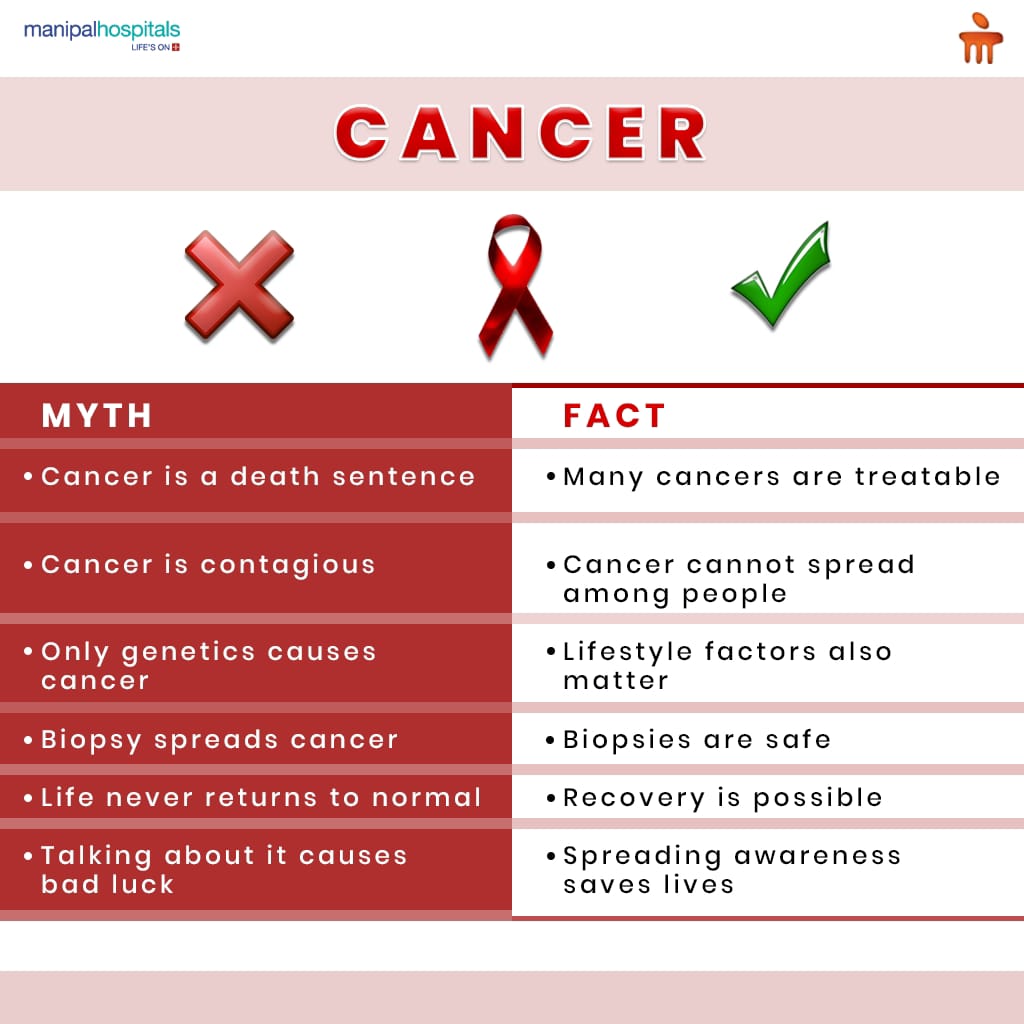
Myth 1: “Cancer is a Death Sentence.”
This is one of the oldest and most persistent cancer myths. Many still hear the word "cancer" and instantly imagine the worst. It creates fear around the diagnosis and stops some people from even asking for help. When we look at real cancer facts, the picture is completely unique.
Cancer today is not the same as it once was. Modern cancer treatment has changed dramatically. Many cancers are treatable when found early. Some are curable. Even in situations where the cancer has spread, people can still live meaningful and active lives for long periods of time.
A few supportive points that bring clarity:
-
Early screening catches problems before they grow.
-
Many cancers respond well to surgery, medicines, and targeted therapies.
-
People often continue with work, hobbies, and family routines through care.
Early detection helps people move forward. It gives doctors more options. It also gives families more confidence. Real cancer facts show that survival improves when care begins early. Raising cancer awareness helps people understand that reaching out sooner is always better.
This myth fades quickly when people experience how personalised cancer treatment has become today. Each plan is adjusted to a person’s health, age, and needs. This shift makes care more manageable and outcomes more hopeful.
Myth 2: “Cancer Is Contagious.”
This misunderstanding stems from fear and a lack of information. It is also one of those cancer myths that quietly harms people because it pushes them away from support. The truth is simple. Cancer does not spread through touch, shared meals, hugs, or sitting next to someone. Scientific knowledge offers clear cancer facts. Cancer develops from changes within a person’s own cells. It has nothing to do with catching something from outside. It is not like a cold or an infection.
This myth causes unnecessary distance. People dealing with cancer often want company, reassurance, and warmth. When others keep away because they believe old stories, it adds emotional strain to an already tough time. Raising cancer awareness helps break this barrier. When people understand what the illness truly is, they show more compassion and empathy. They step closer. They offer help. They become present in ways that matter.
Effective cancer treatment also depends on emotional comfort. When families stay connected, strength grows on both sides. Support makes a significant difference in healing, confidence, and overall well-being.
Myth 3: “Only People with a Family History Develop Cancer.”
It is common to hear people say that cancer runs only in certain families. This idea sounds neat and simple, which is why it spreads fast. But real cancer facts paint a very different picture. While genetics has a role in some cancers, most cases do not come from inherited genes.
Lifestyle habits and environment often have a stronger influence. These risk factors are well recognised:
-
Smoking or tobacco use
-
Limited physical activity
-
Regular alcohol intake
-
Extra body weight
-
Diet patterns low in fresh foods
These influences can raise risk for many people, even without any family history. Understanding these parts of health builds cancer awareness that helps people make choices that protect them over time.
This myth also makes some individuals feel safe when they should be more attentive. People without a family history sometimes skip screening. They believe they will remain unaffected. When cancer myths lead to care delays, issues can grow unnoticed.
Healthier routines, simple movement, and balanced meals support the body. They also give power back to individuals. Even small steps matter. They reduce risk and support long-term well-being. Choosing healthier routines also supports people going through cancer treatment because the body responds better when it is cared for.
Myth 4: “Biopsy or Surgery Makes Cancer Spread.”
Among all the cancer myths, this one stops many from receiving timely care. The idea that touching a tumour or removing part of it will cause it to spread is simply not true. Modern surgical techniques are extremely careful. They are designed to avoid any risk of spreading cells.
Real-world cancer facts show that biopsies are vital. They help confirm the type of cancer. They guide doctors toward the right cancer treatment plan. Without this information, decisions become guesswork, and care becomes less effective.
Avoiding surgery due to fear often leads to delays. These delays allow the disease to grow. Surgery, when recommended, often provides a strong chance for better outcomes. Precise procedures give many people a healthier path forward.
Clear guidance supports caregivers, too. Families feel more settled when they understand why certain steps are necessary. Growing cancer awareness helps people trust the process. It also helps them feel confident that their decisions are based on reliable information, not on myths shared over the years.
Modern medicine continues to improve. Techniques evolve. Recovery becomes smoother. And personalised cancer treatment plans help people feel more involved and informed.
Myth 5: “Once Treatment Is Over, Life Never Returns to Normal.”
It is natural to feel uncertain during recovery. The world looks different for a while. Even then, this belief remains one of those cancer myths that does not match the experiences of many survivors.
People often return to their routines. They rediscover energy. They slowly find joy in familiar places again. Some even develop new perspectives that guide them into fresh chapters. Real cancer facts reveal that follow-up care and emotional support play meaningful roles in this transition.
It is helpful to remember a few gentle truths:
-
Healing takes time and patience.
-
Emotional shifts are normal and shared by many survivors.
-
Supportive relationships make a difference.
Survivorship is a growing area of care. It focuses on life after cancer treatment, not just the medical steps. It helps people manage emotions, rebuild routines, and adjust to a new pace that feels steady and hopeful.
When communities embrace open cancer awareness, it becomes easier for survivors to speak about their needs. They feel understood, not alone. This understanding helps them move forward in their own way and time.
Myth 6: “Talking About Cancer Brings Poor Luck.”
This myth continues quietly in many places. People avoid conversations because they worry it will attract misfortune. This belief holds back cancer awareness, and it limits the flow of important information that could help someone detect issues early.
Talking about illness does not create illness. Sharing experiences does not cause disease. These are old cancer myths that fade when people learn real cancer facts.
Open conversations help communities grow stronger. They teach families what to notice. They guide people toward screening. They also create spaces where questions feel welcome. This openness leads to earlier cancer treatment, which improves outcomes for many.
Changing How We Speak About Cancer?
Open conversations about cancer create a path for people to feel safer and more informed. When someone talks about their worries or symptoms, it spreads awareness that reaches others who might be unsure. Silence often makes fear grow. Honest discussions do the opposite. They help people understand what cancer truly is and what it is not. Cancer is a medical condition. It is not an identity that defines someone. When communities choose compassion, share information, and listen without judgment, stigma begins to fade. People no longer feel that they must walk through the experience on their own.
Knowledge gives people clarity. Awareness brings comfort. Compassion changes how families, friends, and neighbours support one another. These small shifts in conversation shape healthier and kinder spaces for anyone who might face cancer one day.
A Small Note Before You Move Forward
If you ever need guidance, screening support, or clarity around symptoms, the team at Manipal Hospitals Kanakapura Road is always ready to help with care that feels steady and reassuring. One conversation can make everything feel less overwhelming. Consult the best cancer specialist at Manipal Hospitals Kanakapura Road today.
FAQ's
Screening helps identify changes in the body before symptoms grow stronger. This builds better cancer awareness because people understand what to look out for. Early checks also guide timely cancer treatment that often works more effectively.
Talking usually brings comfort because it clears doubts that people hold quietly. Open conversations reduce fear and challenge old cancer myths. They also help families learn real cancer facts that guide healthier decisions.
Every experience is different. Modern cancer treatment is more personalised now, so many people continue their daily routines while receiving care. Honest discussions with doctors help set expectations that feel calmer.
Cancer can affect people at different ages, although the risk rises with time. Effective cancer awareness helps younger groups notice early signs too. Screening at the right age and staying informed make a big difference.
Many people return to work, family time, and hobbies after their cancer treatment ends. Recovery may feel slow in the beginning, yet life often settles into a steady rhythm. Support from others helps the journey feel lighter.
Share this article on: