7 Min Read
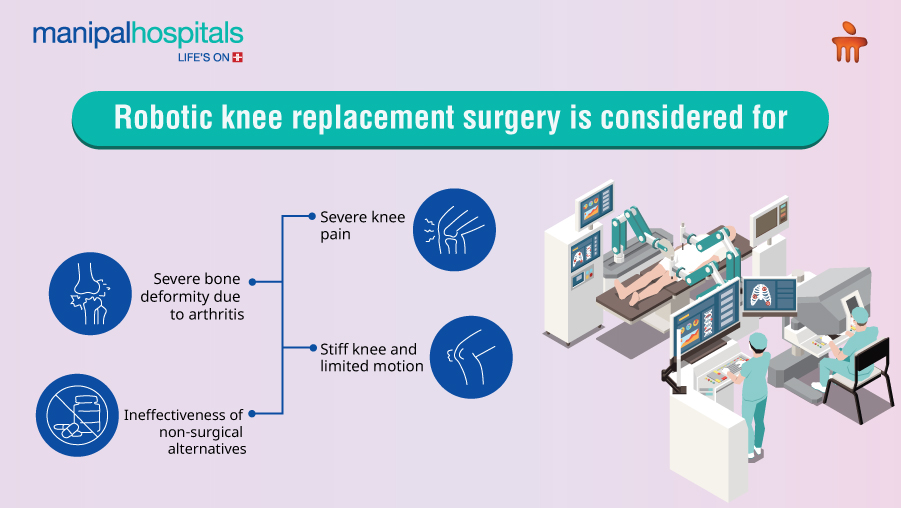
Knee pain significantly impacts daily life. While medications, topical ointments and physiotherapy may be useful to an extent, severe symptoms require a more specialised intervention. Robotic knee replacement surgery offers enhanced precision and potentially better outcomes, especially for individuals suffering from severe arthritis that has led to bone deformity. However, despite being a highly specialised procedure with high success rates, some surrounding myths often prevent people from considering robotic knee replacement surgery as a viable treatment option. This blog helps clarify the procedure, debunks common myths, and highlights its factual benefits.
Synopsis
What is Robotic Knee Replacement Surgery?
Robotic knee replacement surgery is an advanced procedure where a surgeon uses a robotic arm for precise implant placement. It utilises a detailed pre-operative planning by using a 3D knee model that helps customized implant size and position. The system provides real-time guidance, ensuring unparalleled accuracy for better knee joint alignment.
Debunking Common Myths about Robotic Knee Replacement Surgery
Robotic Knee Replacement Surgery is an advanced procedure with high success rates, but it also has a bunch of surrounding myths. Some of the most common misconceptions have been discussed below, along with factual information:
-
Myth 1: The Robot Performs the Surgery Autonomously.
-
Reality: The robot is a precise tool controlled by the surgeon, not autonomous. It uses pre-programmed plans and haptic feedback to ensure exact bone preparation and implant positioning, minimizing human error. The surgeon maintains full control, leveraging expertise with robotic precision.
-
-
Myth 2: Recovery from Robotic Knee Replacement is Longer and More Painful.
-
Reality: This procedure offers enhanced precision, which leads to less tissue damage and accurate implant fit, reducing post-operative pain. This leads to quicker mobility and functional milestones compared to conventional surgery.
-
-
Myth 3: Robotic Knee Replacement is an Experimental and Unproven Technology.
-
Reality: Robotic knee replacement is a well-established and rigorously studied procedure which has been in use for over a decade. Data from hundreds of thousands of procedures confirm its safety and efficacy. Studies have reported high satisfaction among patients, with promising long-term results for implant longevity and reduced revision rates.
-
-
Myth 4: It's Only for Complex Cases or Patients with Severe Deformities.
-
Reality: While excellent for complex cases, robotic knee replacement surgery benefits a wide range of patients. Personalized surgical planning and accurate execution ensure optimal implant placement. This leads to better joint mechanics, alignment, and predictable functional results for many.
-
-
Myth 5: Robotic Knee Replacement is Significantly More Expensive with Little Added Benefit.
-
Reality: Though initial costs may be higher, long-term benefits often outweigh them. Increased precision enhances implant longevity, reducing costly revision surgeries. Faster recovery aids quicker return to daily activities, offering economic benefits and improved quality of life. Optimal alignment is crucial for implant lifespan.
-
-
Myth 6: How Long Does a Robotic Knee Replacement Take?
-
Reality: A robotic knee replacement surgery usually takes 1 to 2 hours. It takes a bit longer than traditional surgery because of extensive planning and setup of the robotic machinery. This minor increase ensures significant precision and improved long-term outcomes.
-
Advantages and Disadvantages of Robotic Knee Replacement
Understanding the full spectrum of this advanced procedure, including the advantages and disadvantages, is crucial for making an informed decision:
Advantages of Robotic Knee Replacement:
-
Enhanced Precision: Unparalleled accuracy (0.5mm/0.5 degrees) in bone cuts and implant positioning.
-
Personalized Planning: Customized surgical plan based on a 3D knee model.
-
Improved Alignment: Optimal knee alignment and soft tissue balance.
-
Faster Recovery: Less tissue damage, reduced pain, quicker rehabilitation.
-
Increased Implant Longevity: Optimal positioning extends implant lifespan.
-
Reduced Complications: Lower risk of post-operative issues.
Disadvantages of Robotic Knee Replacement:
-
Higher Initial Cost: Due to advanced technology.
-
Slightly Longer Surgical Time: For setup and calibration.
-
Specific Surgeon Training: Requires specialized surgeon training.
Care Essentials: Do's and Don'ts After Robotic Knee Replacement
Post-operative care is vital for a successful recovery and maximizing the benefits of your robotic knee replacement surgery.
Do's:
-
Follow Rehabilitation Exercises: Adhere strictly to your physical therapy program.
-
Manage Pain Effectively: Take prescribed pain medication as directed.
-
Keep Incision Clean and Dry: Follow wound care instructions to prevent infection.
-
Elevate Your Leg: To reduce swelling, especially initially.
-
Stay Hydrated and Eat Nutritious Foods: Aids healing and recovery.
-
Use Assistive Devices: Crutches, walker, or cane as advised.
-
Attend Follow-up Appointments: To monitor progress.
Don'ts:
-
Don't Skip Physical Therapy Sessions: Crucial for recovery.
-
Don't Overdo It: Listen to your body; avoid significant pain.
-
Don't Lift Heavy Objects: Avoid excessive strain.
-
Don't Cross Your Legs: Can stress the new joint.
-
Don't Ignore Signs of Infection: Report redness, warmth, or discharge.
-
Don't Drive Until Cleared: Ensure full leg control and no strong pain medications.
Conclusion
Persistent and debilitating knee pain can affect your quality of life immensely. While robotic knee replacement surgery may sound worrying, it is an advanced procedure designed to provide excellent benefits with unmatched precision and accuracy. Our brilliant team of orthopaedic surgeons at Manipal Hospitals Dhakuria is here to guide you every step of the way. If you are suffering from extreme arthritic knee pain and other persistent knee problems, book an appointment with Manipal Hospitals Dhakuria’s orthopaedic surgeons to explore robotic knee replacement surgery.
FAQ's
Suitability varies based on individual factors, but this procedure is excellent for severe arthritis and bone deformity, as well as other, comparatively less serious cases.
Scar size as a result of robotic knee surgery is comparatively much smaller than traditional knee replacement surgery.
Most patients can bear weight and walk with assistance within days. Significant improvement occurs within 6-12 weeks, with full recovery taking 6-12 months.
Yes, physical therapy is crucial for restoring strength, flexibility, and range of motion. It is important part of recovery and rehabilitation.
With optimal placement, implants are designed to last 15-20 years or longer.
Share this article on:


--Mental-Health--The-Hidden-Connection.webp "Chronic kidney disease impact on mental well being")