7 Min Read
High blood pressure, also called hypertension, is known to be a ‘silent killer’ as it causes significant damage to the body even before any symptom is felt. It’s known to have severe damaging effects on the heart and brain. But what remains less known and thereby overlooked is its impact on another vital organ system- the kidneys. Understanding high blood pressure symptoms is crucial in early detection and prevention of chronic kidney disease (CKD). It can also help slow the progression of kidney disease by up to 50%.
Synopsis
What is high blood pressure, and what causes it?
To understand the relationship between high blood pressure and the kidneys, it is important to know- ‘what high blood pressure is’. Blood pressure is the force of blood that pushes against the walls of arteries when the heart pumps. It is measured using two numbers: 1) the number on the top, known as the ‘systolic pressure’, which is the pressure during the heartbeats, and 2) the number at the bottom, called the ‘diastolic pressure’, which is the pressure while the heart rests between beats. When the pressure remains consistently above 130/80 mmHg, it is considered high.
The other important question is ‘what is the reason for high blood pressure?’ 95% of the patients have no single identifiable cause. This is known as ‘primary hypertension’ that develops gradually over many years. A number of factors can be responsible in this case, such as:
-
Genetics: A family history of hypertension can increase the risk significantly
-
Age: The chance for high blood pressure increases with age
-
Lifestyle: A sodium-rich diet, a sedentary lifestyle, excessive alcoholism, and addiction to smoking are significant contributors
-
Underlying conditions: Health issues like diabetes, obesity, and sleep apnoea have a close connection with hypertension
The remaining 5% of people develop high blood pressure due to an underlying condition, kidney disease being one of the primary culprits. This is called ‘secondary hypertension’.
Silent symptoms of high blood pressure
What makes hypertension dangerous is the lack of noticeable symptoms in its early to moderate stages. One can have dangerously high blood pressure for years without knowing it. But the absence of symptoms does not indicate an absence of damage, since high blood pressure symptoms are mostly evident when blood pressure reaches a severely high level (known as a ‘Hypertensive Crisis’). It is critical to understand that waiting for such symptoms to appear is not the right approach. This makes regular check-ups even more essential as routine blood pressure monitoring is the only reliable way to detect hypertension early.
A ‘Hypertensive Crisis’ calls for immediate medical attention. Look out for symptoms like:
-
Severe headache
-
Nosebleed
-
Dizziness or light-headedness
-
Vision changes like blurred vision or seeing spots
-
Blood in the urine
From high blood pressure to kidney disease
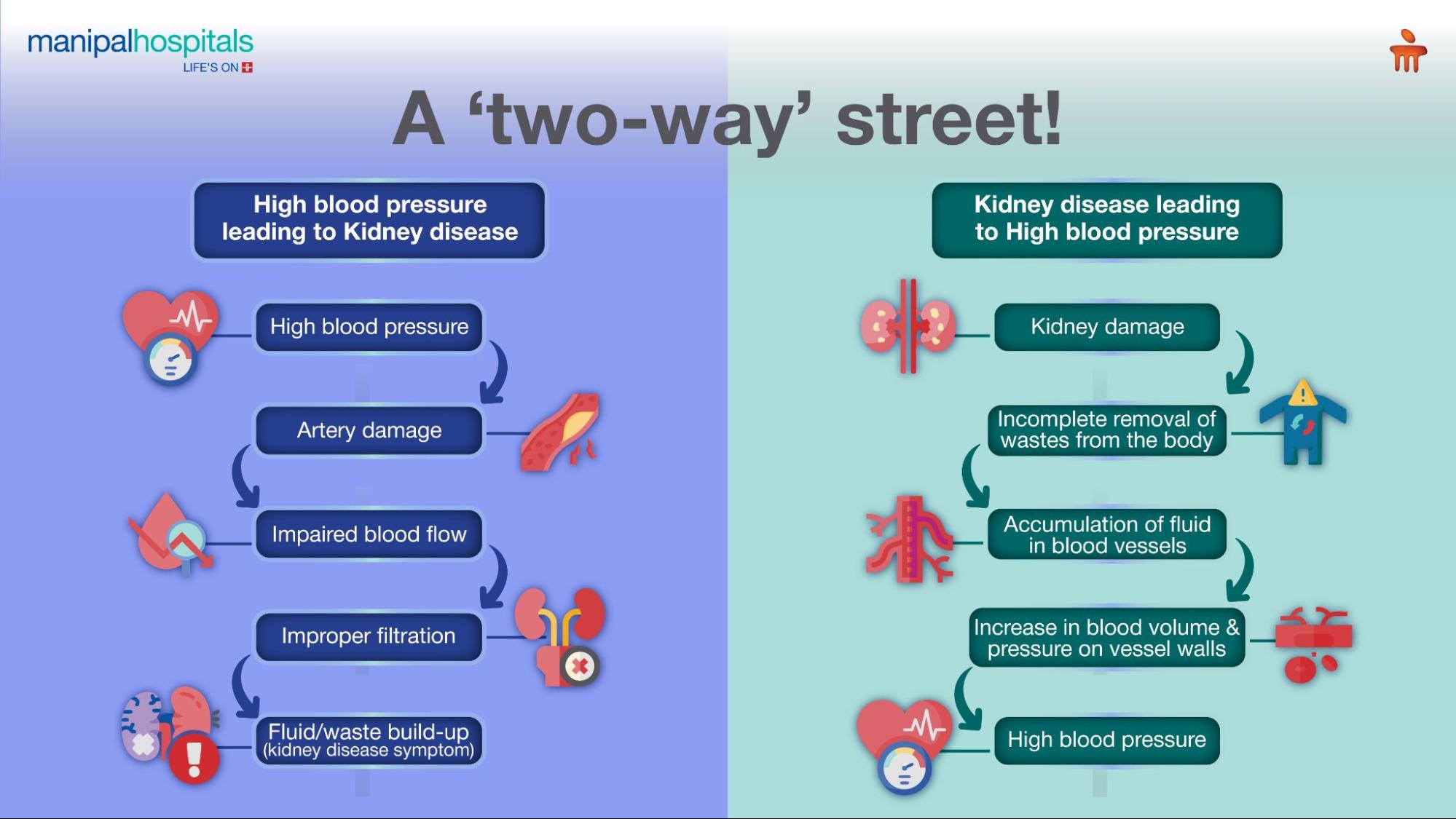
Kidneys form the filtering system of our body and consist of numerous tiny blood vessels (nephrons) that clean waste from the blood. In case of hypertension, the intense force with which the blood flows can damage the structure of the nephrons. This explains why the high blood pressure effect on the kidneys can be severe and long-lasting.
This happens in stages, including:
-
Damage to the arteries- High blood pressure can cause the arteries leading to the kidneys to become narrow, weak, and hard
-
Reduced blood flow- The damage to the arteries can lead to restricted blood flow to the kidney tissue
-
Impaired filtration- Lack of sufficient blood makes the nephrons unable to filter waste and remove excess fluids from the body effectively, a condition known as ‘hypertensive nephropathy’
-
Fluid and waste buildup- With the kidneys' declining ability to filter, high levels of fluid and waste products accumulate in the blood, causing further complications
Yet, according to studies, effective blood pressure management can prove to be incredibly effective in the reduction of the risk of major cardiovascular events and kidney failure progression.
From kidney disease to high blood pressure
The connection between hypertension and kidney health is mutual. If high blood pressure can damage the kidneys, kidney disorders can also cause or worsen high blood pressure. This forms a deadly loop where each condition is aggravated by the other.
High blood pressure caused by kidney disease can be attributed to the vital role played by the kidneys in regulating blood pressure. The kidneys are responsible for balancing the levels of body fluids, besides releasing a hormone called ‘renin’, which controls the tightening and relaxing of the blood vessels. Damaged kidneys cannot perform these functions properly, leading to overproduction of renin or inadequate removal of wastes from the body. This can cause excess fluid accumulation inside the blood vessels, which can increase the blood volume and put extra pressure on the vessel walls. This results in high blood pressure.
How to protect kidney health and control blood pressure?
-
Check your blood pressure levels regularly and keep a log of your readings.
-
Follow a healthy diet like the DASH (Dietary Approaches to Stop Hypertension) diet rich in fruits, vegetables, and low-fat dairy, while low in sodium, saturated fat, and cholesterol.
-
Exercise regularly.
-
Take your prescribed medicines every day and on time.
-
Maintain a healthy body weight.
-
Follow your doctor’s advice in managing your condition.
-
Quit smoking or using tobacco products to avoid damage to the blood vessels.
-
Limit alcohol intake as it can raise your blood pressure.
-
Do not overuse NSAIDs (Nonsteroidal anti-inflammatory drugs), which can harm the kidneys and increase blood pressure, without consulting your doctor.
-
Never miss your follow-up appointments.
Conclusion
High blood pressure and kidney disease have a close link, often worsening each other when left untreated. Regular health check-ups, timely treatment, and healthy lifestyle choices are crucial, as symptoms may not appear until late. Early detection and proper management can protect kidney function, control blood pressure, and prevent serious long-term complications.
If you are experiencing any high blood pressure symptoms or have concerns about your kidney health, reach out to our team of expert cardiologists and nephrologists at Manipal Hospitals, Kolkata, working collaboratively to provide comprehensive care with the help of advanced diagnostics and personalised treatment plans.
FAQ's
While severe kidney damage may not be fully reversible, its progression can often be slowed or stopped. Early detection and aggressive management of high blood pressure are key to preserving remaining kidney function.
Adults over 18 should have their blood pressure checked at least once every two years. If you have risk factors or a previous high reading, your doctor will recommend more frequent checks, often annually or even more frequently.
For some individuals with elevated blood pressure or stage 1 hypertension, lifestyle changes alone can be effective. However, many people will also require medication to reach their target blood pressure and protect their organs from damage.
Yes. Your doctor can advise tests, including a urine test (to check for protein, a sign of kidney damage) and a blood test to calculate your estimated glomerular filtration rate (eGFR), which measures how well your kidneys are filtering waste.
Absolutely. Uncontrolled high blood pressure is a major risk factor for heart attacks, strokes, heart failure, vision loss, and peripheral artery disease. Managing it is essential for your overall health.
Share this article on: