8 Min Read
A sudden inflammation of the gallbladder is called acute cholecystitis, and it can be a painful and concerning condition. This guide will cover its possible causes and symptoms, helping you explore advanced treatment options to help you recover and maintain a healthy life.
Synopsis
What is Acute Cholecystitis?
Before seeking diagnosis and treatment, it is important to understand the condition.
Acute cholecystitis is the sudden swelling and irritation of your gallbladder. The gallbladder is a small organ beneath your liver that stores and concentrates bile.
When this organ becomes inflamed, it leads to significant discomfort and, if left untreated, potentially serious complications. Approximately 10-15% of adults experience gallstone-related issues, with a subset developing acute cholecystitis.
Causes of Acute Cholecystitis
One of the main causes behind acute cholecystitis is complications related to gallstones. These hardened deposits can block the cystic duct, leading to bile build-up, increased pressure, and inflammation within the gallbladder.
-
Gallstones (Calculous Cholecystitis): This is the most common cause behind acute cholecystitis. Obstruction due to gallstone traps bile, causing irritation and inflammation. Severe abdominal pain (biliary colic) can precede an acute attack.
-
Acalculous Cholecystitis: In rare cases, acute cholecystitis occurs without gallstones, often in critically ill patients, like those with severe trauma, burns, or major surgery, due to reduced blood flow or infection.
-
Other Causes: Tumours, infections, or certain blood vessel diseases can also, though rarely, lead to gallbladder inflammation.
Risk Factors of Cholecystitis
There are certain factors which can pose an increased risk for acute cholecystitis:
-
Gender: Women are usually more at risk for acute cholecystitis compared to men.
-
Age: Increasing age increases the risk of cholecystitis.
-
Weight: Obesity or rapid weight loss can increase the risk of acute cholecystitis.
-
Pre-existing conditions: Conditions like diabetes and other related conditions pose a significant risk of acute cholecystitis.
-
Family history: Family history of gallstones can be a factor to watch out for.
Symptoms of Acute Cholecystitis
Identifying acute cholecystitis symptoms promptly is crucial for effective treatment. Symptoms often appear suddenly and range from mild to severe.
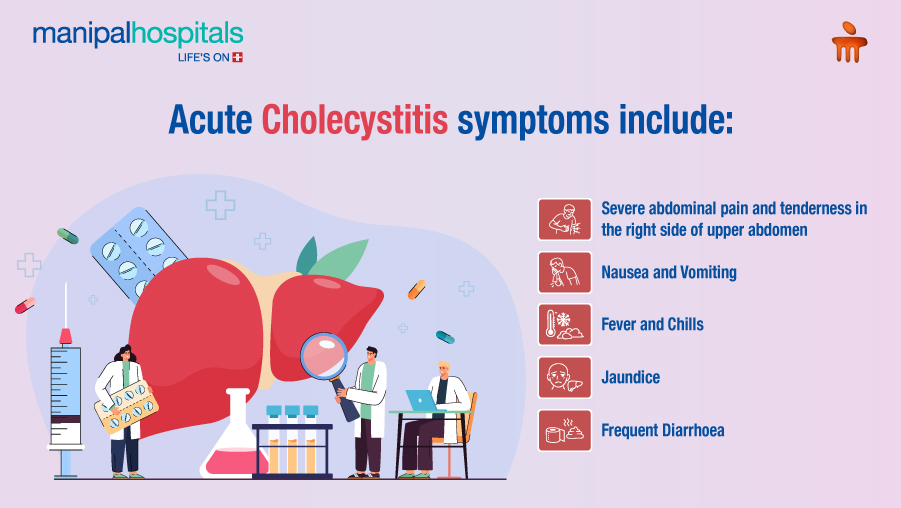
The most common symptom is acute pain in the right side of the upper abdomen, which can even spread to the right shoulder or back. This pain can be severe, constant, and may worsen after eating fatty meals. Other significant symptoms for include:
-
Severe Abdominal Pain: Sharp, persistent pain in the upper right abdomen.
-
Nausea and Vomiting: Often accompanying the pain.
-
Fever and Chills: Indicating infection or inflammation.
-
Tenderness: When the right upper abdomen is touched.
-
Jaundice: Yellowing of skin and eyes, though less common, can occur if a gallstone blocks the common bile duct.
If you experience any of these acute cholecystitis symptoms, especially severe and persistent abdominal pain with fever, seek immediate medical attention to avoid complications of acute cholecystitis.
Diagnosis of Acute Cholecystitis
Accurate diagnosis of cholecystitis involves physical examination, laboratory tests, and imaging studies to confirm inflammation.
-
Physical Examination: Doctors check for tenderness in the upper right abdomen.
-
Blood Tests: Reveal signs of inflammation (elevated white blood cell count) and assess liver function.
Imaging Tests:
-
Abdominal Ultrasound: The preferred method for visualising gallstones, gallbladder wall thickening, and fluid.
-
CT Scan: Provides detailed images and helps rule out other causes of abdominal pain.
-
MRI/MRCP: Offers detailed images of bile ducts and gallbladder, especially for suspected common bile duct stones.
Effective Acute Cholecystitis Treatment
The treatment for cholecystitis typically involves managing acute symptoms, followed by addressing the underlying cause, usually gallbladder removal. This comprehensive approach ensures effective acute cholecystitis treatment and long-term recovery.
-
Initial Management:
-
Pain Control: Medications to alleviate severe pain.
-
Antibiotics: Prescribed for suspected or confirmed infection.
-
Intravenous Fluids: To ensure hydration.
-
-
Definitive Treatment - Cholecystectomy:
The gold standard for acute cholecystitis treatment, especially for gallstone-related cases, is surgical removal of the gallbladder (cholecystectomy). This procedure boasts a success rate of over 95% in resolving symptoms and preventing recurrence, making it a highly effective acute cholecystitis treatment.
-
Laparoscopic Cholecystectomy: This minimally invasive approach is preferred. Small incisions are made for a camera and instruments. Patients experience less pain, shorter hospital stays (1-2 days), and quicker recovery.
-
Open Cholecystectomy: In complex cases (severe inflammation, scarring), a traditional open approach with a larger incision may be necessary.
Care Essentials: Do's and Don'ts for Acute Cholecystitis
Do's:
-
Seek Medical Attention Promptly: For severe right upper quadrant pain, fever, or persistent nausea.
-
Follow Dietary Advice: A low-fat diet initially post-treatment aids recovery.
-
Stay Hydrated: Drink plenty of fluids.
-
Adhere to Medications: Take all prescribed antibiotics and pain relief.
-
Attend Follow-up Appointments: Crucial for monitoring recovery.
Don'ts:
-
Ignore Symptoms: Delaying acute cholecystitis treatment can lead to serious complications.
-
Self-Medicate: Do not treat severe abdominal pain with OTC remedies without medical advice.
-
Consume Fatty Foods: During an acute attack or recovery, fatty foods worsen symptoms.
-
Undertake Strenuous Activities: Follow doctor's guidance on physical activity post-surgery.
Conclusion
At Manipal Hospitals Dhakuria, we understand the importance of timely and effective care for conditions affecting your digestive health. If you are experiencing acute cholecystitis symptoms or have concerns about your digestive health, seek medical advice immediately. At Manipal Hospitals Dhakuria, our experienced Gastroenterology and surgical teams are highly skilled in performing Laparoscopic surgery for acute cholecystitis, ensuring advanced, safe, and effective care, focused on successful recovery.
Book an appointment with our expert gastroenterologists at Manipal Hospitals Dhakuria today. Our dedicated team is here to provide personalized care and guide you towards better health.
FAQ's
While mild inflammation might subside, acute cholecystitis often requires medical intervention. Delaying acute cholecystitis treatment can lead to serious complications.
In most cases, especially if caused by gallstones, surgical removal (cholecystectomy) is the definitive acute cholecystitis treatment to prevent recurrence and complications.
For laparoscopic cholecystectomy, most patients return to light activities within a week and full recovery within 2-4 weeks. Open surgery requires longer.
Most people experience no significant long-term digestive issues. The body adapts, where the liver continues to produce bile, which flows directly into the small intestine.
Untreated acute cholecystitis can lead to severe complications such as gallbladder perforation, gangrene, abscess formation, or life-threatening sepsis.
Share this article on:


--Mental-Health--The-Hidden-Connection.webp "Chronic kidney disease impact on mental well being")