
The Manipal World of care
Consult Our Trusted Cardiac Surgeons, Book an Appointment
The best of modern healthcare ensure you stay healthy, always.


Book Appointment
Book Appointment

8+ Million
Patients Annually

34000+
Employee strength

11000+
Expert Doctor

12600
Licensed beds
Why Choose Manipal?
Our commitment to you is to bring together a team of world-class experts and state-of-the-art facilities and technology to provide the best cardiac services in Bangalore. Choose us for a comprehensive range of cardiac services like:
- Decades of expertise
- Team of top cardiologists, cardiac surgeons, interventional cardiologists & electrophysiologists
- Cutting-edge technology for diagnosis and complex procedures
- Availability of cardiac cath lab
- Dedicated interventional cardiology unit
- Patient-centric personalized care
- Comprehensive post-procedural rehabilitation
- Strict infection control protocols
Best Heart Hospital in Bangalore
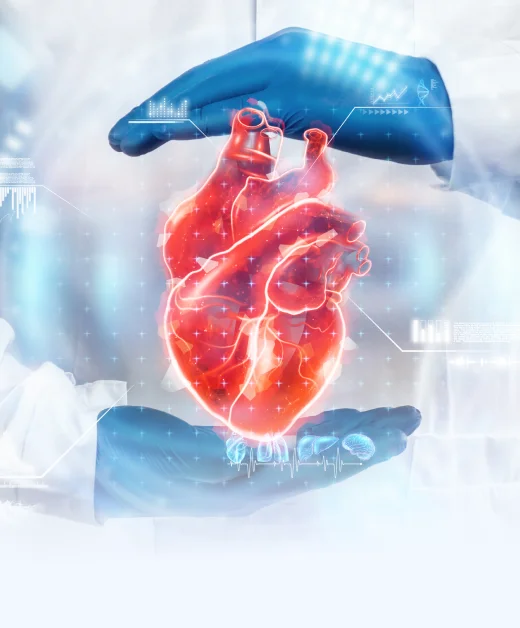
At Manipal Hospital Yeshwanthpur, our expert Cardiologists, Cardiac Surgeons, Interventional Cardiologists, and Electrophysiologists utilize advanced technologies to perform life-saving cardiac procedures. Our experts offer specialised care for chronic and acute heart conditions, with 24/7 access to specialists and high-tech equipment for diagnosis and treatment. The dedicated Cardiac Rehabilitation Program provides comprehensive support after surgery, including specialist appointments, education, and exercise guidance.
Best Heart Hospital in Bangalore
At Manipal Hospital Yeshwanthpur, our expert Cardiologists, Cardiac Surgeons, Interventional Cardiologists, and Electrophysiologists utilize advanced technologies to perform life-saving cardiac procedures. Our experts offer specialised care for chronic and acute heart conditions, with 24/7 access to specialists and high-tech equipment for diagnosis and treatment. The dedicated Cardiac Rehabilitation Program provides comprehensive support after surgery, including specialist appointments, education, and exercise guidance.
Treatments and Procedures
Combining the best specialists and equipment to provide you nothing short of the best in healthcare.
Angiogram
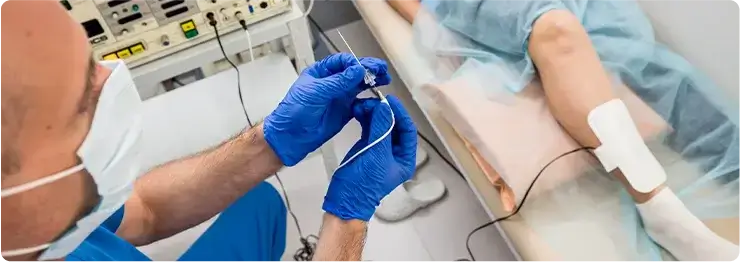
An angiogram is a type of X-ray for examining blood vessels in the heart. It detects
if your coronary arteries are narrowed or blocked (atherosclerosis). The coronary
arteries supply your heart muscle with blood. They can become clogged from a
build-up of cholesterol, cells, or other substances (plaque), reducing the blood
flow to your heart.
During the angiogram procedure, you'll be taken to the heart catheterisation lab. An
intravenous (IV) line will be inserted into your arm for medicine to help you relax
and get fluids. You'll remain awake throughout the test while lying on a table near
a camera and other equipment. After numbing spots on your groin or arm, a thin tube
(catheter) will be inserted into an artery and threaded up to your heart. A special
fluid will be injected to help your arteries show up clearly on X-rays. These X-rays
will then be taken, allowing your doctor to examine for any coronary artery
problems. The entire procedure takes between 30-50 minutes.
Treatments and Procedures
Combining the best specialists and equipment to provide you nothing short of the best in healthcare.
Angiogram
An angiogram is a type of X-ray for examining blood vessels in the heart. It detects
if your coronary arteries are narrowed or blocked (atherosclerosis). The coronary
arteries supply your heart muscle with blood. They can become clogged from a
build-up of cholesterol, cells, or other substances (plaque), reducing the blood
flow to your heart.
During the angiogram procedure, you'll be taken to the heart catheterisation lab. An
intravenous (IV) line will be inserted into your arm for medicine to help you relax
and get fluids. You'll remain awake throughout the test while lying on a table near
a camera and other equipment. After numbing spots on your groin or arm, a thin tube
(catheter) will be inserted into an artery and threaded up to your heart. A special
fluid will be injected to help your arteries show up clearly on X-rays. These X-rays
will then be taken, allowing your doctor to examine for any coronary artery
problems. The entire procedure takes between 30-50 minutes.
Angioplasty
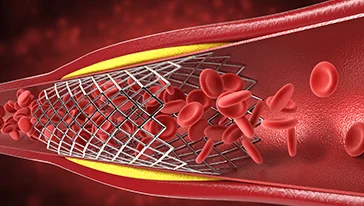
Angioplasty is a minimally invasive procedure that opens up narrowed or blocked coronary arteries in your heart and improves blood flow. It is commonly performed along with angiography and can take from 30 minutes to several hours, depending on the complexity of the procedure and your condition.
During an angioplasty surgery, our best cardiologists in Bangalore will insert a small, deflated balloon catheter (a small tube) into the narrowed artery through the groin or wrist. The catheter is navigated through one artery into the narrowed heart artery. The balloon is inflated to push against the plaque build-up, allowing more oxygenated blood to flow to the heart. For angioplasty using a stent, a heart specialist doctor places a stent inside the artery during the same procedure.
After everything is done, the catheter will be carefully removed and you will be monitored for a while to ensure no complications. There might be some soreness or bruising, which resolves within a few days.
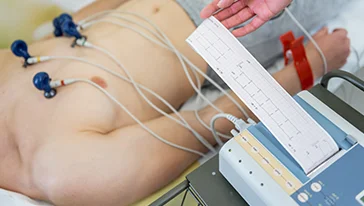
ECG
An electrocardiogram (ECG) is a simple test to check your heart's rhythm and electrical activity. Sensors attached to the skin detect the electrical signals the heart produces with each beat. These signals are recorded by a machine and reviewed by a doctor to see if they are unusual. A cardiologist may ask you to have an ECG if they suspect a heart problem.
Four patches are placed on the limbs (called limb leads): one on each shoulder or upper arm and one on each leg. Six patches are placed on the chest (called chest leads), starting just to the right of the breastbone and forming a semi-circle, ending near the left underarm. The patches are connected to an ECG machine that records the heart's electrical activity and prints it on paper. Newer ECG machines have video screens to help the technician, nurse, or doctor check the quality of the recording. If necessary, the test can be repeated. Sometimes, cardiac doctors must view the heart from different angles. In this case, the chest leads can be moved to the right chest wall or the back.
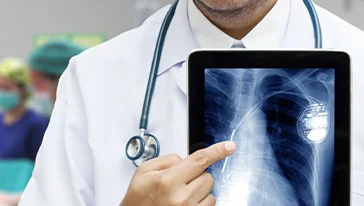
Pace Maker
A pacemaker is a small electronic device that helps to regulate your heartbeat. It is implanted under the skin below your collarbone on your chest. A pacemaker can be used to treat various heart rhythm issues like bradycardia (slow heart rate) or arrhythmias (irregular heartbeats). It delivers electrical pulses when necessary to ensure your regular heartbeats.
An implanted pacemaker has two parts:
● The pulse generator: A small battery-powered unit that sends electrical signals to your heart to help it beat normally.
● Pacing leads: One or more small wires connect the pulse generator to your heart. These insulated wires are placed in one or more heart chambers to send electrical signals to adjust your heart rate.
During pacemaker implantation, the doctor inserts thin wires (leads) into one or both heart chambers which transmit electrical signals between the heart and the pacemaker generator. He then connects them to the pacemaker device placed under your skin. We have a team of expert cardiologists and paediatric cardiologists who will take care of you and your child following the daycare procedure.
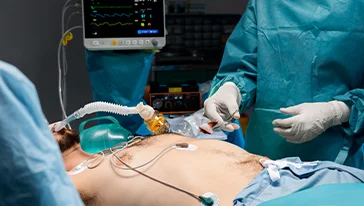
Open Heart Surgery
Open-heart surgery is a broad term for surgical procedures conducted to address heart issues by directly accessing the heart through an incision in the chest. It is used to manage various heart conditions, such as heart failure, heart valve disease, arrhythmias, aneurysms, and coronary artery disease. Open-heart surgery typically takes place in advanced cardiac operating rooms and lasts between 4 and 6 hours.
Coronary Artery Bypass Grafting (CABG) is a type of open heart surgery that restores blood flow to areas of your heart that aren’t getting enough blood and greatly improves your heart function. This surgery is needed when the arteries coming from the heart are narrowed or blocked and the patient is not eligible for other minimally invasive techniques. In case of a heart attack, if other initial treatments fail, the procedure may be performed as an emergency treatment.
There are two main approaches:
• On-pump CABG: During this surgery, your heart is temporarily stopped using a heart-lung bypass machine while doctors stitch grafts (healthy vessels) from your chest, leg, or wrist onto your blocked coronary arteries.
• Off-pump CABG: This approach avoids stopping the heart. Instead, your surgeon uses special devices to stabilise the heart while attaching grafts to bypass the blockages.
During the heart bypass surgery, our cardiothoracic surgeon makes an incision in the chest to access the heart. The patient is placed on a heart-lung machine to temporarily take over the heart's function. The surgeon then diverts blood flow around a section of a blocked artery in the heart and uses a healthy blood vessel from another part of the body (leg, arm, abdomen, or chest) to bypass the blocked artery. The section is attached to the blocked or narrowed artery.
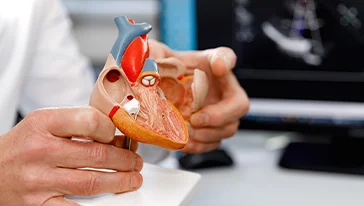
Valve Replacement
Severe valve damage requires replacement, commonly involving the aortic or mitral valve. The valve replacement procedure is crucial for treating life-threatening valve diseases, and some patients may need multiple valves repaired or replaced.
Two types of valves are used for replacement: mechanical valves and biological valves.
• Mechanical valves are made from durable materials like plastic, carbon, or metal and are long-lasting. However, they require lifelong blood-thinning medications to prevent blood clots.
• Biological valves, on the other hand, are made from animal tissue (xenograft) or donated human tissue (allograft/homograft) and sometimes from the patient's tissue (autograft). These don’t require blood-thinning medications but are less durable than mechanical valves.
Transcatheter Aortic Valve Implantation or Replacement (TAVI/TAVR)
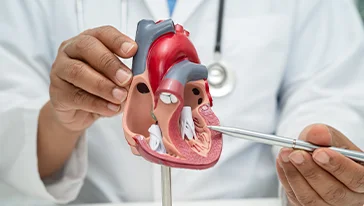
The aortic valve opens to allow blood from the heart to flow throughout the body. Aortic stenosis occurs when this valve can’t open and close properly, straining the heart and causing symptoms like breathlessness, swollen ankles, chest pain, dizziness, and fainting. Conventional treatment often involves open-heart surgery, but this may be too risky for those who are very ill or have multiple medical conditions.
Transcatheter aortic valve implantation (TAVI) allows the implantation of an aortic valve via a catheter. These valves are crafted from natural tissue from cows or pigs, re-engineered, and attached to a flexible, expandable mesh frame. The valve is compressed around or within the catheter and guided to the heart for implantation. Once implanted, the catheter is removed, and the new valve begins functioning immediately.
Bypass Surgery(CABG)
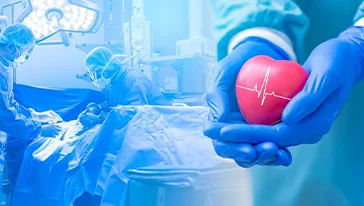
Bypass surgery, also known as coronary artery bypass grafting (CABG), is a procedure to improve blood flow to the heart. It's commonly used for individuals with severe coronary artery disease (CAD), where the arteries supplying blood to the heart muscle become narrowed or blocked.
Why is it Needed?
1. Severe Coronary Artery Disease: When arteries are blocked by plaque, it restricts blood flow, leading to chest pain (angina) and increasing the risk of heart attacks.
2. Unsuccessful Angioplasty: If less invasive procedures like angioplasty and stent placement are not viable or fail to provide relief.
3. Multiple Blockages: When there are several arterial blockages that can't be treated with angioplasty.