+919513631594
Lorem ipsum dolor sit amet, consectetur adipiscing elit, sed do eiusmod tempor incididunt ut
+919513631594
Lorem ipsum dolor sit amet, consectetur adipiscing elit, sed do eiusmod tempor incididunt ut
Senior Consultant - Orthopaedics & Joint Replacement Surgery
Qualification:
MBBS | MS Ortho | MCH (UK)
Senior Consultant - Orthopaedics & Joint Replacement Surgery
Qualification:
MBBS | MS Ortho | MCH (UK)
Total Knee Replacement at Manipal Hospital is a reliable and effective procedure for individuals with severe knee arthritis, knee pain, or knee instability. With a team of experienced surgeons, state-of-the-art facilities, and high-quality care, Manipal Hospital is a preferred destination for Total Knee Replacement treatment in India. Manipal Hospitals is one of the best multispecialty hospitals in India and is known for providing quality medical treatments to patients. One of the popular treatments offered in Total Knee Replacement. This procedure is recommended for individuals with severe knee arthritis, knee pain, or knee instability, causing difficulty in performing everyday activities.
Established in February 2018, the department is equipped with state-of-the-art infrastructure and highly specialised and best team of orthopaedic surgeons in Patiala who are proficient in complex surgical procedures. Manipal Hospital is the best orthopaedic hospital in Patiala with a dedicated theatre complex comprising 10 operation theatres, which is coordinated by highly trained OT staff including technicians, nurses, guest relation officers, etc. With patient safety and satisfaction of prime importance, our operation theatres are secured with a double barrier to entry and exit as well as laminar flows that control contamination keeping infection risks to an all-time zero. Our easy-to-use and fast operating software allows easy retrieval of a patient’s outpatient & inpatient summary and helps in better coordination amongst various medical departments. Manipal Hospital is a true symbol of its logo ‘Pragyanam Brahma’ (knowledge is life). Interdepartmental meets, continuing medical education (CME) and staff training sessions are held regularly to update knowledge.
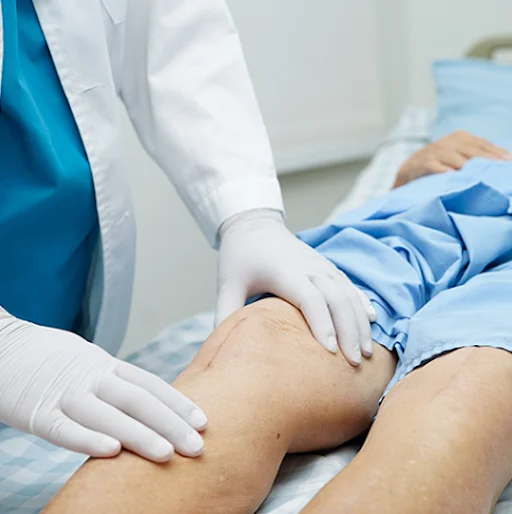
Total knee replacement surgery is one of the most successful and life-enhancing procedures. It relieves almost 95% of pain and improves mobility, hence enabling patients to return to work and lead a near-normal life. Knee replacement surgery is a safe and effective surgery. Doctors usually suggest a replacement surgery as a treatment modality after trying medication, walking aids, and physiotherapy. A normal knee functions as a hinge joint between the upper leg bone (femur) and the lower leg bone (tibia) and the knee cap (patella). Total knee replacement, or total knee arthroplasty, is a surgical procedure in which the damaged surface of the knee joint is resurfaced with artificial parts (prostheses) made of plastic and metal. It replaces the worn-out parts of the knee joint with man-made parts. The cartilage of the knee when worn out or damaged, can result in the top of the shin bone rubbing against the lower end of the thigh bone, causing pain and deformity. In this surgery, the upper end of the shin bone and the lower end of the thigh bone are replaced with plastic inserted between the two. In some cases, the kneecap is also replaced. This is done when other options like physiotherapy and medication do not provide adequate relief. This may be due to osteoarthritis (age-related degeneration), injury, or rheumatoid arthritis. Regardless of the diagnosis, all patients with severe disabling knee pain that interferes with quality of life and activities of daily living qualify for this surgery. Usually, it takes 2-3 months after surgery to see the full benefits of the surgery.
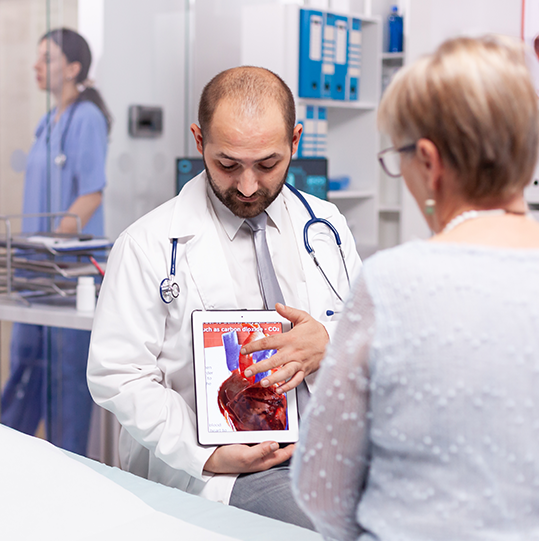
This is a non-surgical procedure that is used to treat coronary arteries for stenosis. It is a combination of angioplasty & stenting that widens narrowed and blocked coronary arteries and restores blood flow from the heart. In cases of acute heart attacks (Myocardial Infarctions), PCI is used as an emergency treatment. PCI is considered to be an alternative to bypass grafts.
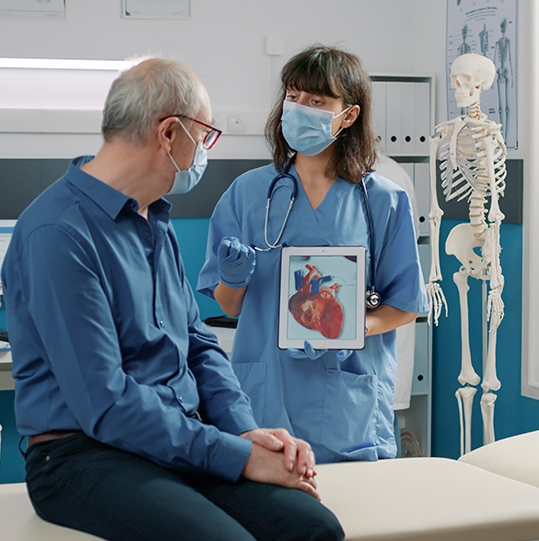
An X-ray imaging test is done to see if there are any restrictions in blood flow going to your heart. This is the most common test to help doctors diagnose heart conditions. During coronary angiography, a small catheter or tube is inserted through the skin into an artery in the groin or the Hand. Through a special x-ray viewing instrument, the catheter is moved to the opening of the coronary arteries which supply blood to the heart. A small amount of solution containing iodine is injected into each artery. The images that are produced are called the angiogram which accurately reveals the blockages.
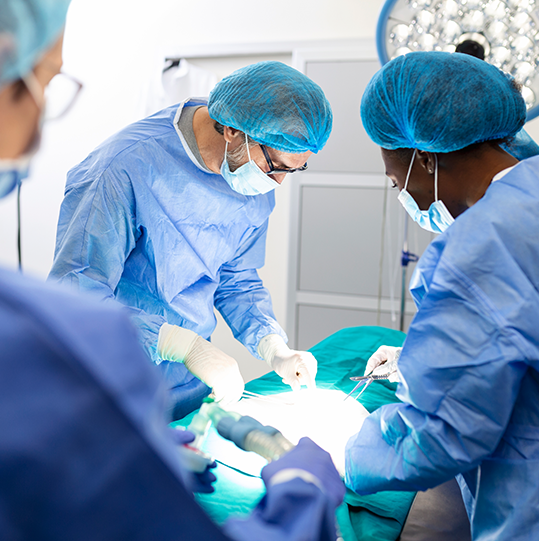
Coronary angioplasty is routinely done to open clogged heart arteries. It can improve symptoms such as chest pain and shortness of breath. Angioplasty is also often used during a heart attack to quickly open a blocked artery and reduce the amount of damage to your heart. It involves inserting and inflating a tiny balloon into the spot where your artery is clogged to help widen the artery. Angioplasty can also be done through the artery in your wrist instead of the arm or thigh. The radial approach, through the wrist, is usually preferred by cardiologists due to its benefits in terms of bleeding, its superficial location and easy compressibility and low risk of restricted blood supply to the tissues. Rotablation The rotational Atherectomy of coronary arteries technique is used to debulk the heavily calcified coronary arteries and to prepare the lesion for a stent implantation, through the thigh.
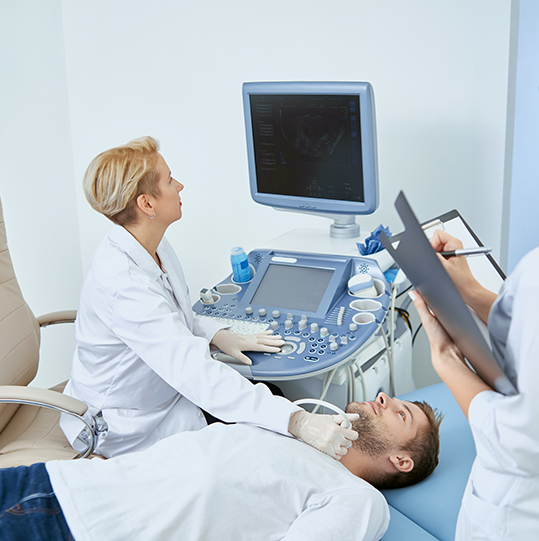
A cardiac device helps control irregular heartbeats to protect against heart rhythm disorders. One of the most commonly used cardiac devices is a pacemaker, which produces electrical stimuli to the hearst to help it maintain rhythm.An Implantable Cardioverter Defibrillator (ICD) is used to assist the heart's ventricles to restore their capacity after an irregularity. The surgery to implant these devices is quick and patients are often discharged soon after the procedure is completed.
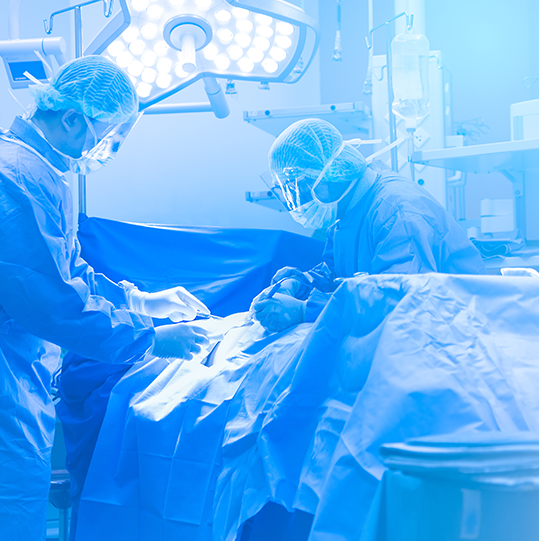
This is a procedure that involves the opening of the chest cavity and creating a bypass system that allows blood to pump through your body without going through the heart. During open heart surgery, the heart is stopped for a period of time until surgical procedures or investigations can be completed. Once the surgical objective has been achieved, the surgeon restarts the heart and closes up the chest cavity.

At Manipal Hospitals, we also provide cardiovascular services to children. Pediatric cardiologists trained in treating children work together with other pediatric
specialists to diagnose and treat children and adolescents. Antenatal Fetal Echocardiogram
. Balloon Dilatation of Stenotic Valve in Neonates, Newborns, and Children
. Hemodynamic evaluation of Complex Congenital Heart Diseases
. Counseling following a diagnosis of congenital heart defects in Neonates, Infants, Children, and Adults
. Device closure of abnormal communication such as Patent Ductus Arteriosus (PDA)
. Device closure of Septal Defects such as Ventricular Septal Defects (VSD) and Atrial Septal Defects (ASD)
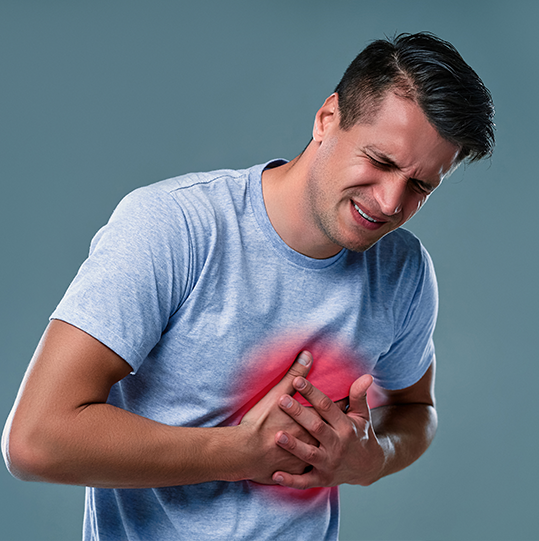
The heart muscle, in order to function, needs food and oxygen to survive. The arteries or the blood vessels present within the heart supply the required food and oxygen to the heart muscles. These blood vessels in the heart may get blocked and narrowed due to several reasons, such as unhealthy eating habits, smoking and lack of exercise. As the blockage decreases, the blood supply to the heart muscle gradually decreases, which ultimately leads to a total cut-off. The formation of blockage leads to the heart muscle not getting enough food and oxygen, resulting inaheart attack.

FAQ's
Contact Us
Manipal Hospital,
Bhupindra Road, Near
22 No. Phatak,
Patiala,
Punjab 147001
Email: info@manipalhospitals.com
Accreditations



Doctor Enquiry: 9513631594
Contact Us
Manipal Hospital,
Bhupindra Road, Near
22 No. Phatak,
Patiala,
Punjab 147001
Email: info@manipalhospitals.com
Accreditations