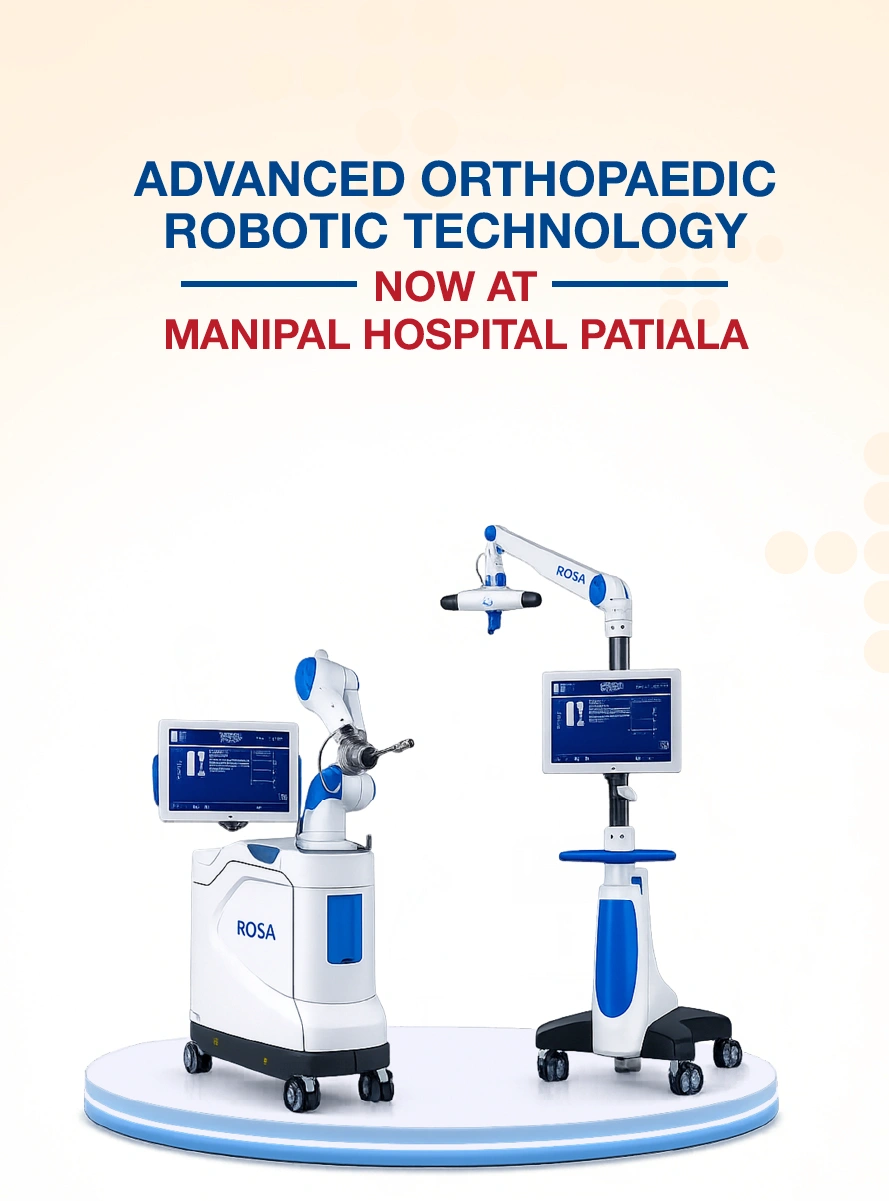

Robotic orthopedic surgery offers enhanced precision for robotic knee replacement and robotic hip replacement procedures, helping patients with conditions such as osteoarthritis, rheumatoid arthritis, and post-traumatic arthritis regain mobility and improve their quality of life. Using advanced robotic-assisted technology, surgeons create a personalized surgical plan and achieve precise implant positioning and alignment during joint replacement surgery. For eligible patients, robotic-assisted surgery may result in reduced pain, improved joint function, shorter hospital stays, and faster recovery. At Manipal Hospitals, Patiala, our experienced orthopedic surgeons combine advanced technology with clinical expertise to deliver personalized, patient-centric care.

Senior Consultant - Orthopedics & Joint Replacement Surgery
Qualification: -
MBBS | MS | M.Ch

Consultant - Orthopedics Joint Replacement & Arthroscopic Surgery
Qualification: -
MBBS | MS
Senior Consultant - Orthopedics & Joint Replacement Surgery
Qualification: -
MBBS | MS | M.Ch
Consultant - Orthopedics Joint Replacement & Arthroscopic Surgery
Qualification: -
MBBS | MS
Robotic-assisted orthopedic surgery enables surgeons to plan procedures in detail and achieve precise implant positioning and alignment. This level of accuracy helps optimize joint function while preserving healthy bone and surrounding soft tissues wherever possible.
Advanced robotic technology creates a patient-specific surgical plan based on detailed imaging, allowing surgeons to tailor the procedure according to each patient's unique anatomy.
Robotic-assisted knee replacement and hip replacement procedures may involve smaller incisions and less disruption to surrounding tissues where clinically appropriate. This can help reduce blood loss, postoperative discomfort, and the risk of complications.
By improving surgical precision and minimizing soft tissue disruption, robotic-assisted surgery may help reduce postoperative pain and support a smoother recovery. Many patients are able to begin walking and rehabilitation earlier, depending on their overall health and recovery progress.
Accurate implant placement and balanced joint alignment can contribute to improved joint stability, better range of motion, and enhanced mobility, helping patients return to everyday activities with greater confidence.
Precise implant positioning may improve the longevity and performance of joint replacements. Combined with appropriate rehabilitation and lifestyle modifications, robotic-assisted surgery can support durable, long-lasting results.
At Manipal Hospitals, Patiala, we combine experienced orthopedic specialists, advanced robotic technology, and comprehensive rehabilitation to deliver high-quality care for robotic knee replacement, robotic hip replacement, and other robotic orthopedic procedures.
Your journey begins with a comprehensive consultation with our orthopedic specialist. A detailed medical evaluation, physical examination, and imaging studies such as X-rays or CT scans help assess your joint condition and determine whether robotic knee replacement or robotic hip replacement is the right treatment option.
Using advanced imaging and robotic-assisted technology, your surgeon creates a patient-specific surgical plan based on your unique anatomy. This enables precise planning of implant size, positioning, and alignment before surgery.
During the procedure, your orthopedic surgeon performs the surgery while the robotic-assisted system provides real-time guidance to support accurate bone preparation and implant placement according to the personalized surgical plan. The surgeon remains in complete control throughout the procedure.
Following surgery, our multidisciplinary care team closely monitors your recovery, manages pain effectively, and initiates early rehabilitation to promote healing and restore mobility.
A personalized physiotherapy program helps improve strength, flexibility, and joint function. Regular follow-up visits enable your orthopedic surgeon to monitor recovery and support the best possible long-term outcomes.
| Aspect | Robotic Surgery | Traditional Surgery |
|---|---|---|
| Incisions | Small, minimally invasive | Large, open incisions |
| Precision | High accuracy with robotic arms & 3D vision | Limited by human hand movement |
| Scarring | Minimal scarring | Noticeable scarring |
| Blood Loss | Reduced due to precision | Higher risk of blood loss |
| Recovery Time | Faster recovery, shorter hospital stay | Longer recovery and hospital stay |
| Risk of Complications | Low-risk procedure with advanced control | Higher chances of infection/complications |
The cost of robotic orthopedic surgery in Patiala depends on several factors, including the severity of the condition, the complexity of the procedure, the hospital facilities, the surgeon's expertise, and the duration of hospital stay. Additional expenses like diagnostic tests, medicines, and post-surgery rehabilitation can also influence overall charges. At Manipal Hospital Patiala, patients are provided with transparent robotic surgery cost estimates to plan ahead. With a focus on quality care, we strive to make advanced robotic procedures accessible by offering affordable treatment options without compromising outcomes.