


Expert Heart Artery Treatment
at Manipal Hospital Malleshwaram
Angioplasty in Bangalore.
Book An Appointment
What Is Angioplasty?
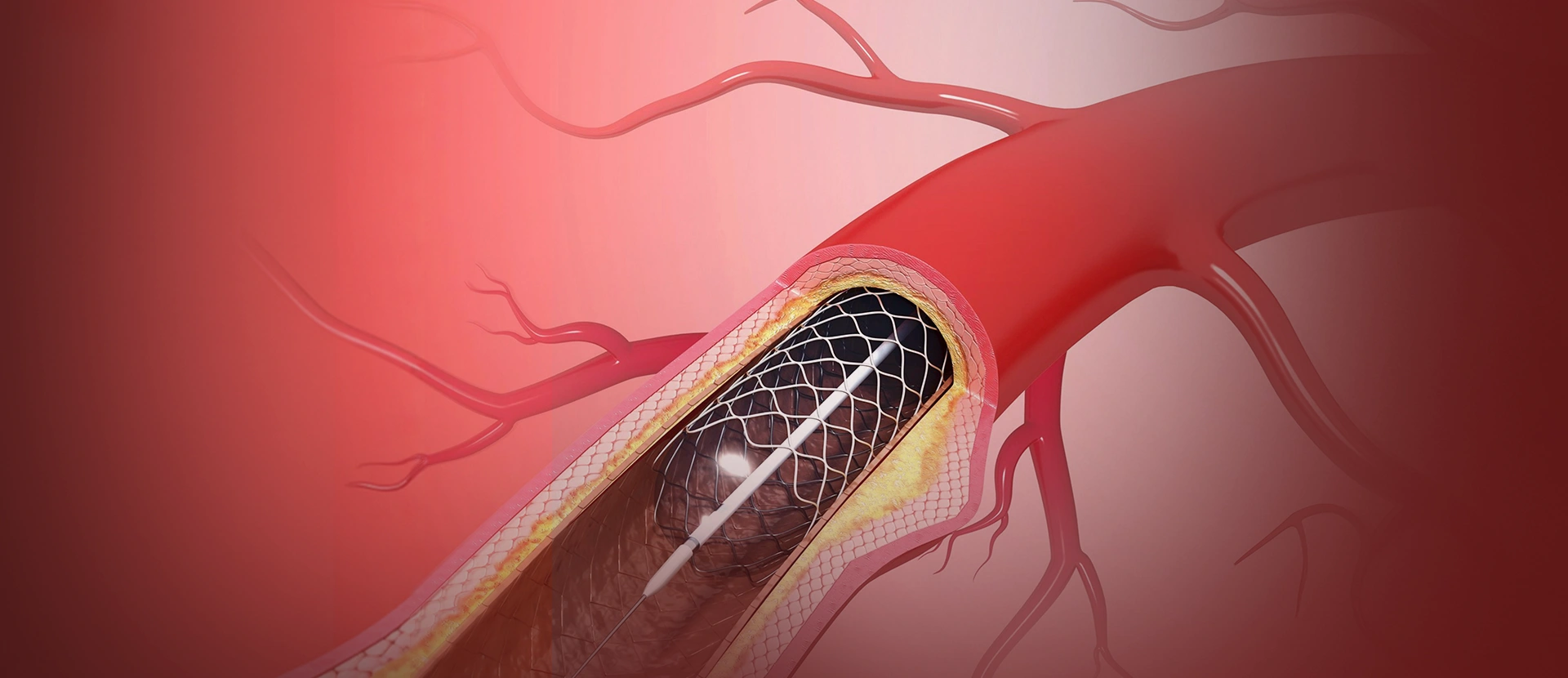
Angioplasty, also known as Percutaneous Coronary Intervention (PCI) is a minimally invasive cardiac procedure used to open blocked or narrowed coronary arteries and restore proper blood flow to the heart muscle. A small balloon is inflated inside the blocked artery to widen it, and in most cases, a stent (a small mesh tube) is placed to keep the artery open long-term.
Manipal Hospital Malleshwaram, Bangalore, is a leading centre for angioplasty, offering advanced cardiac care with a focus on precision, safety, and faster recovery, so you can return to a healthy, active life sooner.
Why Choose Manipal Hospital Malleshwaram for Angioplasty?
Angioplasty – Procedure Details
Why Do You Need Angioplasty?
- Coronary artery disease (CAD): When arteries supplying the heart become significantly narrowed, reducing blood flow.
- Heart attack (Myocardial Infarction): Emergency angioplasty (primary PCI) is the most effective treatment for opening a blocked artery during a heart attack.
- Angina (Stable/unstable): Persistent chest pain that is not adequately controlled with medications.
- Failed medical management: When lifestyle changes and medications are no longer sufficient to manage coronary blockages.
- Post-angiogram findings: When a coronary angiogram reveals significant blockages requiring intervention.
Types of Angioplasty
- Balloon Angioplasty: A tiny balloon is inserted into the blocked artery and inflated to open the narrowing. Usually followed by stent placement.
- Coronary Stenting (Bare Metal Stent): A metal mesh stent is placed to keep the artery open after balloon dilation.
- Drug-Eluting Stent (DES) Placement: A medicated stent that releases drugs over time to prevent re-narrowing (restenosis) — the current gold standard.
- Rotational Atherectomy: Used for heavily calcified arteries that cannot be opened with a standard balloon alone.
- Cutting Balloon Angioplasty: A specialised balloon with tiny blades that scores the plaque before dilation, used in resistant lesions.
Factors Affecting Angioplasty Cost
- Number and type of stents used
- Complexity of the blockage (single vessel vs. multi-vessel)
- Emergency vs. planned procedure
- Additional diagnostic imaging used (IVUS, FFR)
- Pre-existing medical conditions
- Duration of hospital stay and post-operative care
Post-Operative Care
At Manipal Hospital Malleshwaram, we are committed to ensuring a smooth and full recovery after angioplasty. Our care team provides:
- Continuous monitoring in the cardiac care unit (CCU)
- Wound and access site care
- Medication management
- Dietary and lifestyle guidance
- Structured cardiac rehabilitation programs
- Regular follow-up appointments