




Trusted Expertise for All Heart Health Problems
Consult with our Top Heart surgeons
At Manipal Hospital Kanakapura Road
Book An Appointment
Best Cardiology Hospital Near Kanakapura Road, Bangalore
Your heart works tirelessly for you, so when it needs care, only the best will do. The right
cardiac specialist ensures accurate diagnosis, timely treatment, and long-term heart health. You
deserve a team that combines advanced technology with compassionate, patient-centred care.
That’s exactly what we offer at our state-of-the-art cardiology centre.
With a highly skilled team of cardiologists, cardiac surgeons, and diagnostic experts, Manipal
Hospital Kanakapura Road, Bangalore, provides personalised treatment plans based on the latest
medical research and clinical guidelines. From routine heart evaluations to complex procedures
like coronary artery bypass grafting (CABG), our aim is to restore and maintain optimal heart
function. So, whether you're experiencing a minor arrhythmia or facing a serious heart
condition, our goal is to guide you through a smooth, effective recovery with respect, empathy,
and medical excellence

Why Choose Us?
If you are looking for the best cardiology hospitals, do visit Manipal Hospital Kanakapura Road. The following are reasons why patients near me choose us to be their trusted heart care centre:
Treatments and Procedures
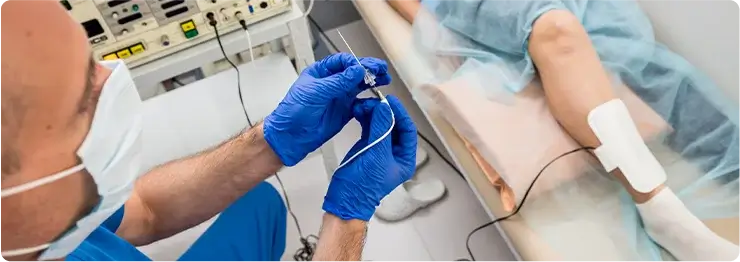
A coronary angiogram is a simple procedure used to determine whether the arteries
supplying the heart have become narrowed or blocked. It is considered the most effective
method for diagnosing coronary artery disease.
The procedure usually takes about 15–20 minutes and is designed to keep patients as
comfortable as possible. During the test, a catheter is guided to the heart through an
artery in either the wrist or groin. A contrast dye is injected to make the arteries
visible on imaging. Using specialised methods, our cardiologists and radiologists can
accurately identify complex cardiovascular conditions. If a significant blockage is
found, the cardiologist may perform an angioplasty and place a stent during the same
procedure while the patient remains under anaesthesia. This helps keep the artery open,
improves blood flow, and reduces the risk of future blockages.
Patients requiring cardiac care benefit from:
- Pre-procedure screening and consultation
- The hospitals have advanced imaging and Cath Lab access
- Minimally invasive catheter insertion
- If required, it is important to act with immediate angioplasty and stenting
- Following precise infection protocols and caring for patients who test positive
Our Facilities
Our cardiology doctors in Kanakapura Road, Bangalore, offers state-of-the-art infrastructure to deliver modern, precise, and patient-centric heart care. We combine advanced medical technology with a team-based approach to manage various cardiovascular conditions. Key modern facilities and services include:

Advanced cardiovascular diagnostic services

24/7 interventional cardiology services

Coronary Care Unit (CCU)

Advanced cardiac catheterisation lab

Cardiac rehabilitation centre

24-hour acute chest pain care