
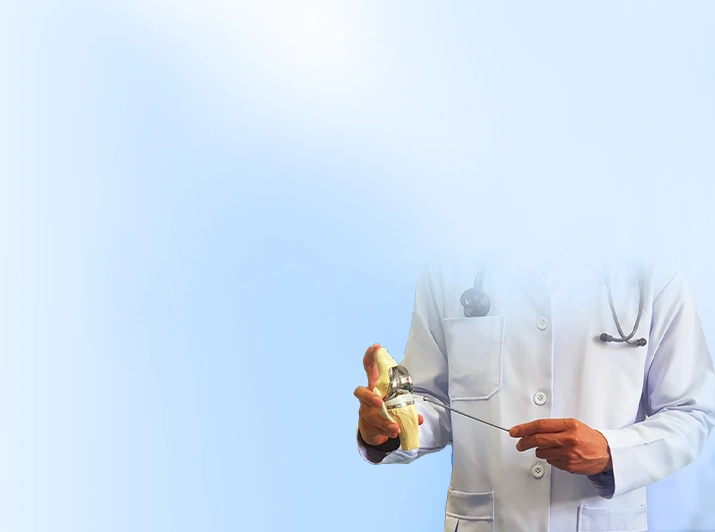
Expert Orthopaedic Care
at Manipal Hospital Old Airport Road
Advanced Treatment for Bone &
Joint Conditions with Faster Recovery
Advanced Treatment for Bone &
Joint Conditions with
Faster Recovery


Expert
Orthopaedic Care
Expert Orthopaedic Care
at Manipal Hospital Old Airport Road
Advanced Treatment for Bone &
Joint Conditions with Faster Recovery
Advanced Treatment for Bone &
Joint Conditions with Faster Recovery
Treatments and Procedures
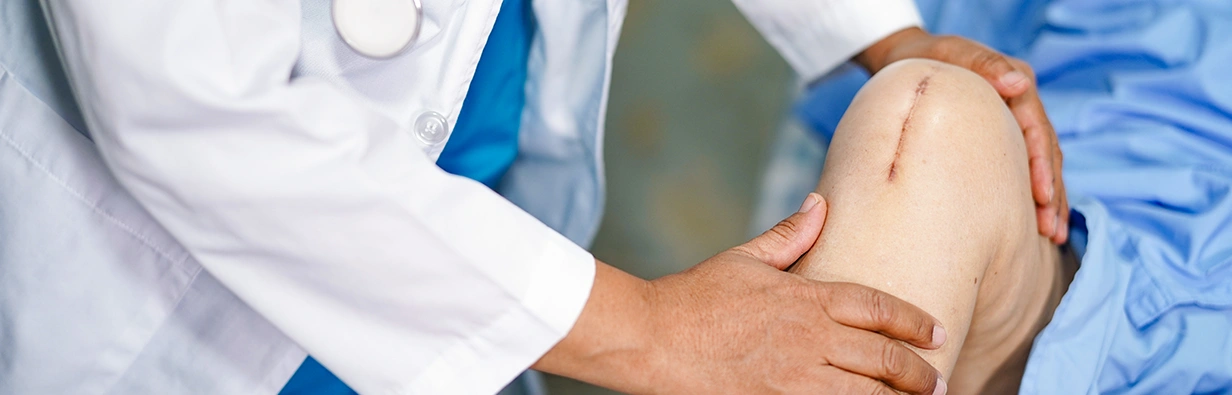
Total knee replacement (TKR) is a standard orthopaedic surgical approach that is intended to enhance the quality of life of people with end-stage osteoarthritis by lowering pain and boosting function. It has been shown to increase patients' sports and physical activity. A surgeon will evaluate your knee's strength, stability, and range of motion to determine whether or not you should have a knee replacement. Your age, weight, degree of exercise, the size and form of your knees, and general health will determine the best replacement joints and surgical procedures for you.
During the procedure, the articular surfaces of the knee joint like the femoral condyles and the tibial plateau are replaced with artificial (prosthetic) smooth metal and highly cross-linked polyethylene plastic materials. In young patients, total knee replacement is also an option for correcting serious knee joint or bone injuries. Total knee replacement can also be used to address minor valgus or varus deformity.
In terms of outcomes, most persons who have had TKR surgery report pain alleviation, greater mobility, and a higher quality of life. Most knee replacements are predicted to survive for at least 15 to 20 years after surgery. Patients can easily engage in low-impact activities such as walking, swimming, sports, or bicycling when they have recovered.
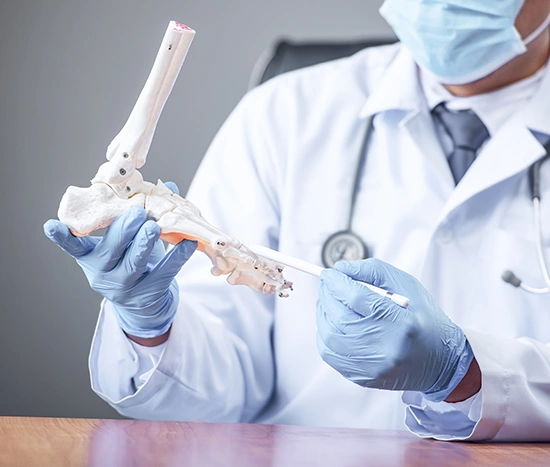
Best Orthopaedic Hospital
in
Bangalore
The Department of Orthopaedics at Manipal Hospital Old Airport Road, Bangalore, provides
comprehensive care for conditions affecting bones, joints, muscles, ligaments, and the
spine. Our team manages both acute injuries and long-standing orthopaedic conditions with
a focus on restoring function and movement.
We treat conditions such as arthritis, sports injuries, fractures, ligament tears, spine
disorders, joint degeneration, and complex trauma cases. Treatment plans may include non-
surgical therapies, minimally invasive procedures, or advanced joint replacement surgeries
depending on individual needs.
With a strong emphasis on rehabilitation, pain management, and post-treatment mobility,
our orthopaedic team supports patients from diagnosis through complete recovery.
Why Choose Us?
At Manipal Hospital Old Airport Road, we focus on restoring movement, strength, and independence. Our orthopaedic care goes beyond surgery—emphasising precision treatment and structured recovery. Choose us because we offer:

Highly experienced Orthopaedic Surgeons specialising in joint replacement, sports injuries, trauma, and spine care

Advanced surgical techniques including arthroscopy, robotic-assisted joint replacement, and minimally invasive spine surgery

Accurate diagnostics for faster decision-making and treatment planning

Team-based orthopaedic care combining surgeons, physiotherapists, pain specialists, and rehabilitation experts

Recovery-focused treatment plans tailored to each patient’s lifestyle and mobility goals
Our Facilities
At Manipal Hospital Old Airport Road, Bangalore, our Orthopaedics department is designed to support faster recovery, improved mobility, and long-term joint health. From advanced diagnostics to structured rehabilitation, every facility is built around helping patients move better and live pain-free.

Advanced imaging for bone, joint, and spine assessment

Modular, high-precision orthopaedic operation theatres

Arthroscopic and minimally invasive orthopaedic procedures

Dedicated orthopaedic ICU & post-surgical monitoring

Comprehensive physiotherapy and gait rehabilitation units

Non-surgical pain management and regenerative therapies

Dedicated patient coordination desk

Pre- and post-surgery education programs

Integrated care with spine, trauma, sports medicine, and rehabilitation specialists